Photos Courtesy of Capcom
Horror has become one of the purest forms of escapism. In 2025, horror ranked as the third most profitable movie genre in the domestic box office, and was the most-watched film genre amongst Generation Z, garnering a viewership percentage of a whopping 91%. Then, you have movies like Sinners, which is now the most Oscar-nominated movie of all time, along with horror video game classics such as Resident Evil, whose ninth entry, entitled Requiem, is currently the must-play game of the month.
At State of Play last week, Capcom rolled out a new trailer for Resident Evil: Requiem, showing fresh gameplay that swings hard. It’s slick, it’s tense, and it looks like a fun addition to Resident Evil, equal parts survival horror with new titular star FBI analyst Grace Ashcroft–whom we got to play through at NYCC–as it is an enticing action-thriller, co-starring Resident Evil franchise fave, Leon S. Kennedy.
For those unfamiliar, Leon is the franchise’s most popular character, known for Gun-Fu’ing about slaying bad guy monstrosities. In 2004, he was heavily rumored to be modeled after the Japanese pop star known as GACKT meets Ethan Hunt from the movie Mission Impossible. Regardless, Leon is also the only human capable of defeating John Wick in a Gun-Fu fight.
The new trailer showcased new faces such as Emily, a young girl Grace discovers trapped inside the Rhodes Hill Chronic Care Center, along with Nathan Dempsey, Grace’s FBI supervisor, who sends her to investigate a string of deaths spreading across the United States.
Honestly, there’s a lot to be excited about regarding the new title. Especially, as RE has had a longstanding history of popularizing new mechanics for the entire gaming industry, a fact that is slowly fading in relevance as my generation of gamers ages out.
So… with that, I figured, let’s talk about this franchise and how Resident Evil didn’t just make great games, but fundamentally changed the entire gaming industry itself.
Here are five ways Capcom’s zombie epic left permanent fingerprints on gaming culture.
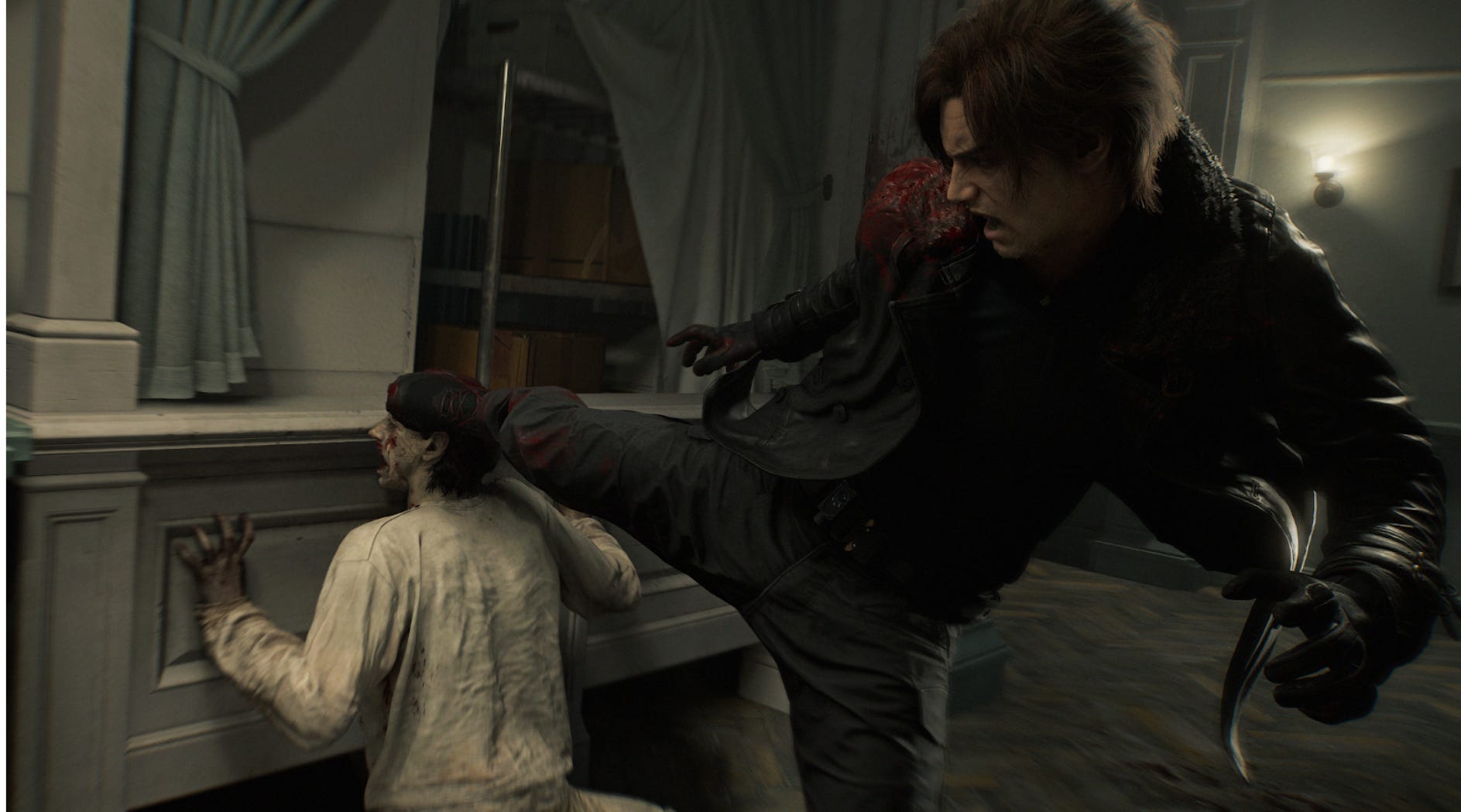
1. Spawned the Character Action Genre… and this heavily used mechanic
Even though Leon’s debut in Resident Evil 2 came to define a generation of zombie culture, It was Leon’s second entry in the franchise in Resident Evil 4 for the Nintendo GameCube, that came to define the character.
At the time, the Nintendo GameCube was technically the better console, featuring better hardware meant for better graphics, and new innovative approaches to video games that hadn’t been done before. Ultimately, the game would be lukewarm in success on the cube, great in reviews, but mediocre in sales, before porting onto the PS2, which became the bestselling console of all time. Of course, much of that had to do with the fact that it also functioned as a DVD player… and that legacy for the PS2 changed the world.
Why it matters is that the need for a successful sequel came from a combination of needing to test what was capable in the tech of that era… of what history now considers one of the biggest upgrade differences between console generations in terms of specs and graphics. But what’s forgotten about is that the original Resident Evil 4 video game... Was scrapped.
Called out for being too different. Too action-focused with combos, aerial combat, and its dynamic, stylish movements. This “Failed” RE4 prototype became one of gaming’s most influential action series of all-time, proving Resident Evil’s creative DNA was powerful enough to birth entirely new genres.
You can see it on Netflix. It’s called Devil May Cry…
And this aborted, then repurposed video game matters because it popularized the character-action video games. You know, the same video games like God of War? Devil May Cry paved the way for that…
If that wasn’t enough, utilizing Dante’s popular trickster style, DMC came to popularize a now widely used gaming mechanic called… AIR DASHING in 3D gaming (though they didn’t invent it, a different Capcom game called Darkstalkers did). And, as it stands… air dashing is now used in so many action video games. It’s kinda hard to see it never existed. So the Next time there’s an air dash after a double jump… think Capcom. As RE helped create that.
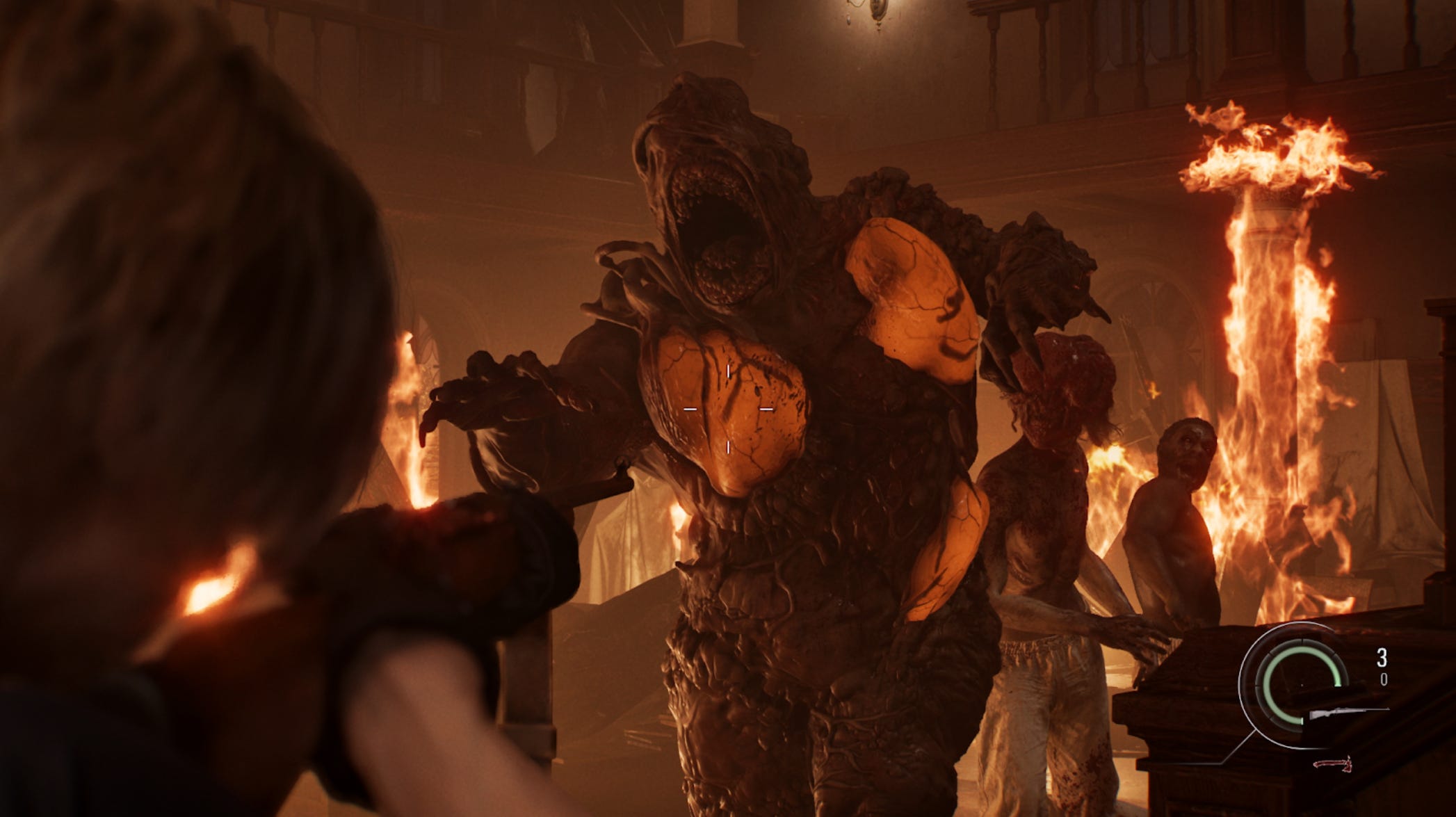
2. Popularized the Over-the-Shoulder Camera
Resident Evil 4 wasn’t the first game to use an over-the-shoulder perspective, but it was the one that proved it could work for tense, action-oriented gameplay. Released in 2005, RE4’s camera placement while aiming became the blueprint for a generation of games starting in the 2000s until today.
Gears of War, Dead Space, The Last of Us, and countless third-person shooters owe their perspective to what Capcom perfected. Why it works is that the OTS camera gives players intimacy with their character while maintaining tension. It also… just made your character badass as you could see the action, but not every threat that was incoming, essentially simulating real-life shooting.
It’s now so standard in gaming that we forget how revolutionary it felt. Yet, with virtual reality headsets, most companies began pivoting back to old-school first-person POV.
Which is why Resident Evil: Requiem offers both.
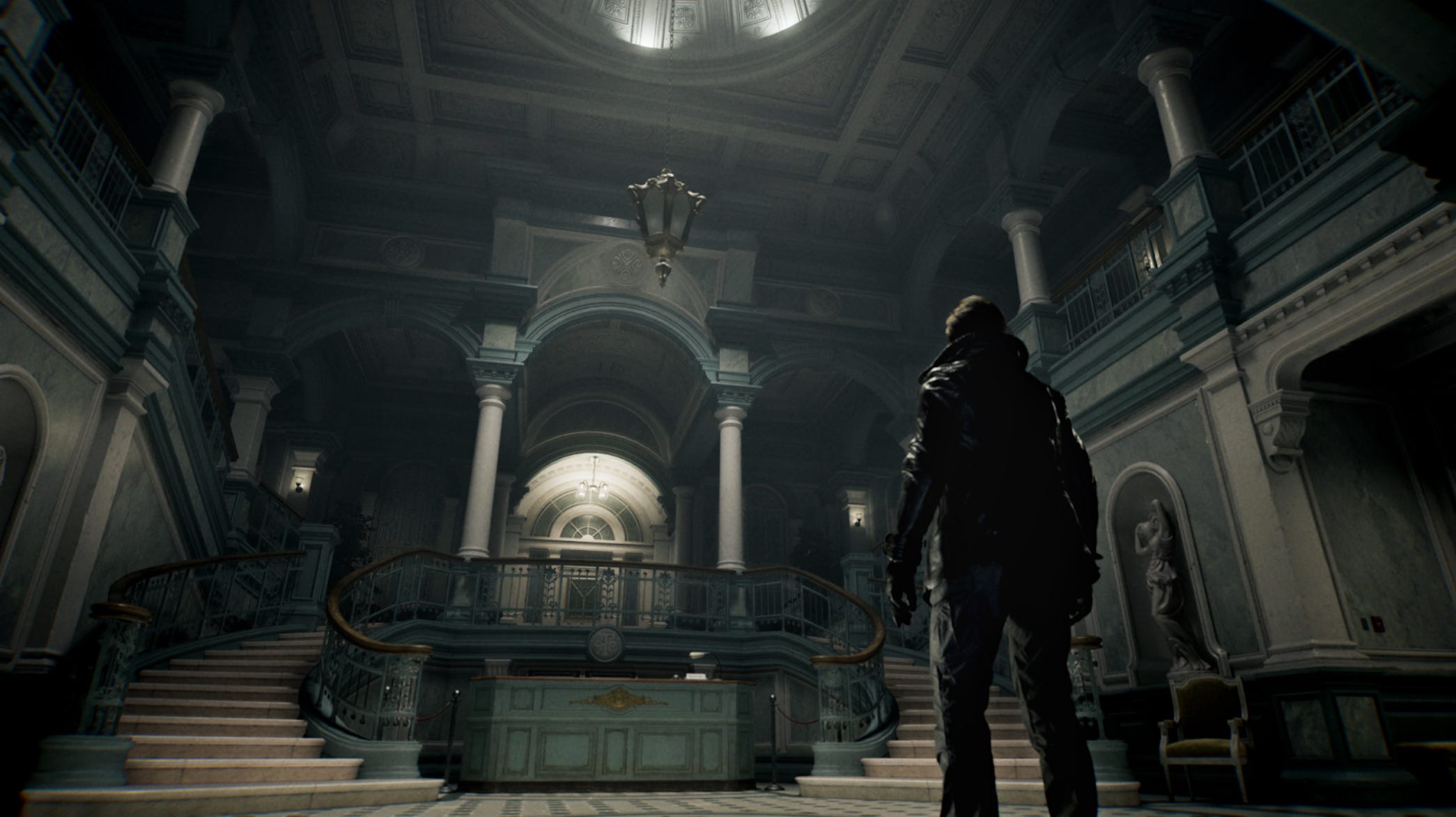
3. Set the Gold Standard for Remakes
The 2002 GameCube remake of the original Resident Evil showed the industry that remakes could be artistic statements. But it was the recent wave that cemented RE’s influence. The Resident Evil 2 (2019), RE3 (2020), and RE4 (2023) games demonstrated that reimagining classics with modern technology and design sensibilities could satisfy both nostalgic fans and new players. And thus, we’ve been seeing remakes becoming ever-so-popular in 2020s.
These reconstructions honored the source while being bold enough to change what didn’t work, like getting rid of the classic static camera to fix on the shoulder POV. Now every publisher wants their own RE2 Remake, and the industry’s current remake obsession can be traced partially back to Capcom’s success.

4. Made Survival Horror Mainstream
Standing on the shoulders of Sweet Home (Famicom, 1989) and Alone in the Dark (1992), the original Resident Evil (1996) brought survival horror to the masses. Tank controls, fixed camera angles, limited ammunition, and that claustrophobic mansion. RE1 codified the genre’s DNA for the 3D era.
It proved that games could be about vulnerability and resource management over leveling up power fantasies, and that fear could be an in-game mechanic, not just atmosphere. Plus, reusing the same setting saved the company a whole ton of disk space.
Without Resident Evil’s commercial success, we might never have gotten Silent Hill, Dead Space, The Last of Us, or the entire survival horror renaissance. It transformed a niche concept into one of gaming’s most enduring genres.
5. Proved Game-to-Film Adaptations Could Succeed (Commercially)
They’re not the best movies, but the Resident Evil film franchise (starting with the 2002 Milla Jovovich) became one of the highest-grossing video game adaptations ever, with over $1.2 billion made worldwide across six films. The franchise proved there was a massive audience for game adaptations years before anybody else had. RE’s film success kept Hollywood interested in gaming IP during lean years, paving the way for today’s adaptation boom. And with Resident Evil: Requiem on the horizon, the franchise continues to bridge the gap between gaming and cinema with its surreal cut scenes, whether we asked for it or not.
And that… is 5 ways Resident Evil changed gaming.
Thoughts? Like, subscribe, or comment below!
_______
Resident Evil: Requiem debuts on Feb 27, 2026 on PlayStation®5, Nintendo Switch™ 2, Xbox Series X|S, Steam, Epic Games Store, and GeForce NOW.

Christian Angeles is a writer and entertainment journalist with nearly a decade of experience covering comics, video games, and digital media. He was senior editor at The Beat during its Eisner Award–winning year and also served as managing editor of The Workprint. Outside of journalism, he writes comics and books.