All Photos courtesy of FX
Working in media right now comes with a quiet expectation that wasn’t always there: you don’t have to just write or develop good work, now you need to show up on camera. Visibility has become part of the job, and a beautiful presentation carries more weight than anyone cares to admit.
Everyone is expected to be polished, appealing, and easily packaged, as if being taken seriously now requires being visually consumable. It’s a low hum of pressure rather than an outright demand, but it’s always there… and now it’s starting to feel like a little too much.
The Beauty is a strangely good experiment in that art of too much. A bonkers, sex-littered, high-fashion body horror show from the minds of Ryan Murphy and Matthew Hodgson. A spiritual successor to Nip/Tuck and American Horror Story, this show is a strange satire of sorts, commenting on our Ozempic-shooting beauty-obsessed culture. Just dialed up to eleven in the craziest way possible.
Based on the Image Comics series by Jeremy Haun and Jason A. Hurley that was recently re-released through Ignition Press, The Beauty is a messy satire that largely expands on its source material. It takes place in a world where a miracle treatment known as “The Beauty” promises perfect looks, improved health, and enhanced strength, but with one caveat: it comes at the cost of the user’s life.
The Beauty spreads through bodily fluids like a sexually transmitted disease, turning beauty itself into something contagious and transactional. It’s a dark, exaggerated metaphor; just imagine the AIDS epidemic or a global pandemic, but engineered by ruthless corporations as a beauty product. The show doesn’t hide its message: perfection is fleeting, and beauty solves nothing. In the end, much like extreme wealth, it’s hollow and unsatisfying.
Compared to the comics, the TV adaptation leans harder into action and violence, with spy agent fight sequences and sexuality functioning more as a narrative device than outright provocation. Though there are, undeniably, a-hole lot of butt shots (Ba-Dum Tss!)….
The body horror is genuinely effective in its purpose, veering into creepy, with Resident Evil-styled grotesquerie of sticky, naked bodies abound. The monstrosities are reinforcing the show’s strange identity as a sex-pandemic horror story that could only work in the post-COVID era.
Tonally, The Beauty walks a fine line between splatterfest and social critique, with a lot of people comparing it to the movie The Substance, even though the comic has been around since 2015. Sometimes the show dazzles. Sometimes it collapses under its own indulgence. Rarely is The Beauty ever boring. Designed for weekly releases, the show thrives on piecemealing its escalating reveals and ending on cliffhangers with pacing that works better when you sit with each episode’s discomfort rather than binge at once.
Now, each episode centers on a different character or perspective, slowly expanding the conspiracy from supermodels to billionaires and beyond. This episodic approach mirrors the comics, which were often scattered outside the main investigative plot, allowing for different emotional and thematic angles rather than forcing everything into a tight procedural.
The Cast carries The Vibe
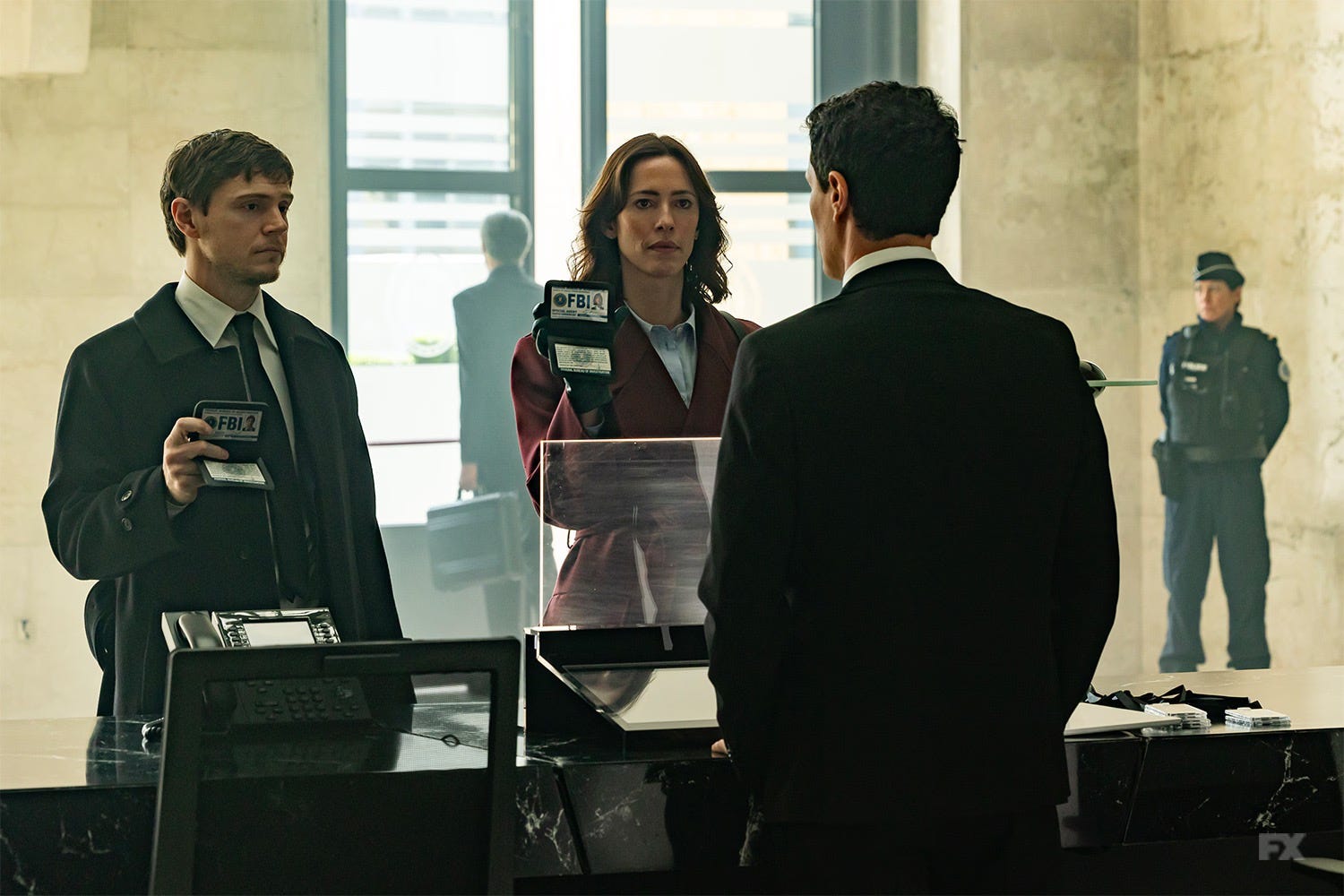
The cast is uniformly strong, as Rebecca Hall and Evan Peters anchor the early episodes as FBI agents Jordan Bennett and Cooper Madsen, two work partners who are secretly doing the deed, whose organic friends-with-benefits but should be more chemistry, gives the audience an emotional baseline before things spiral into excess.
Evan Peters does what he always does best in these Murphy projects: he understands the tone and commits to the character fully. Meanwhile, Rebecca Hall essentially plays herself as the character, a request the showrunners specifically asked for, which then sees Jordan play off as a charming, independent, and fiercely determined woman, much to the show’s advantage.
Why this is important is that a big hook of the storytelling that makes this show unique is the metamorphosis. Essentially, replacing yourself with the best and most beautiful versions of yourself… So, when Jessica Alexander steps in as a younger version of Jordan, she delivers an eerily effective impersonation. The writers put efforts in to show she’s not necessarily “hotter” just younger. And in a series obsessed with beauty culture, that distinction matters. If you watch closely, there are layers of choices like this intentionally crafted in the written design.
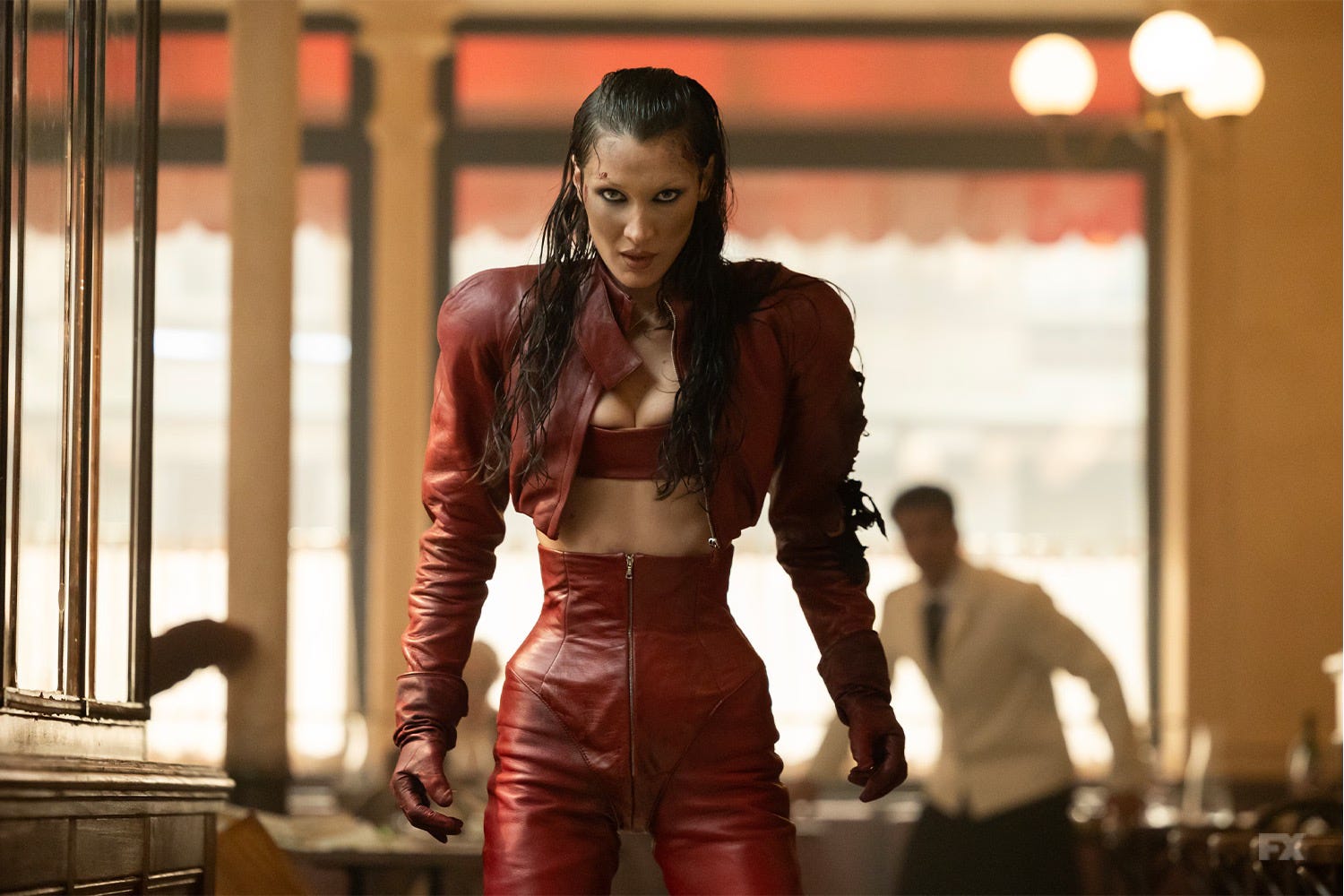
Surprisingly, the show kicks off with Bella Hadid’s modeling sequence, which turns deadly in a surprisingly intense, violent opening that features a lot of her own stunt work. You can compare how she opens the series versus the comic’s opening pages down below, and I will admit…this is the kind of directing and coordination that makes the show different.
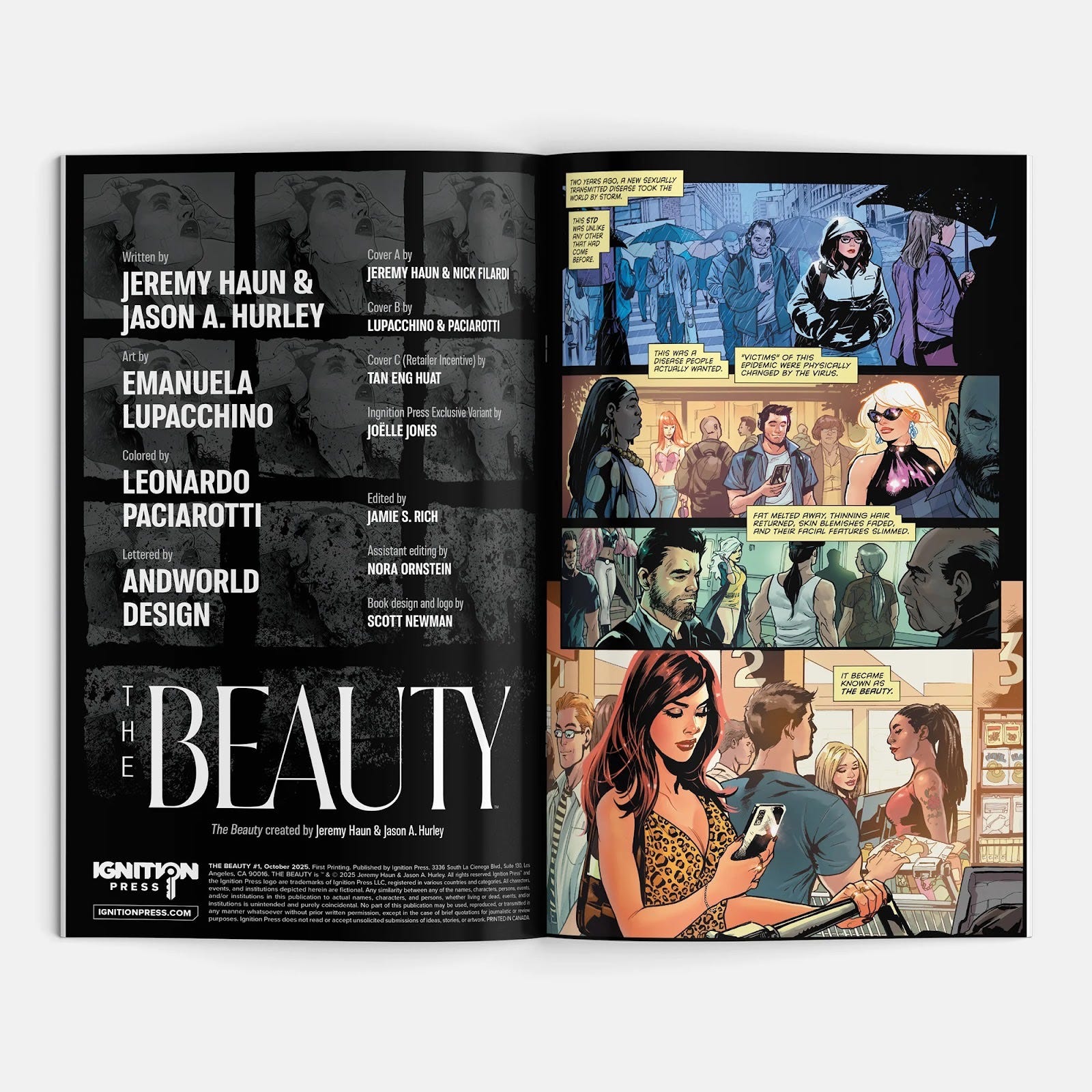
Credit: Ignition Press
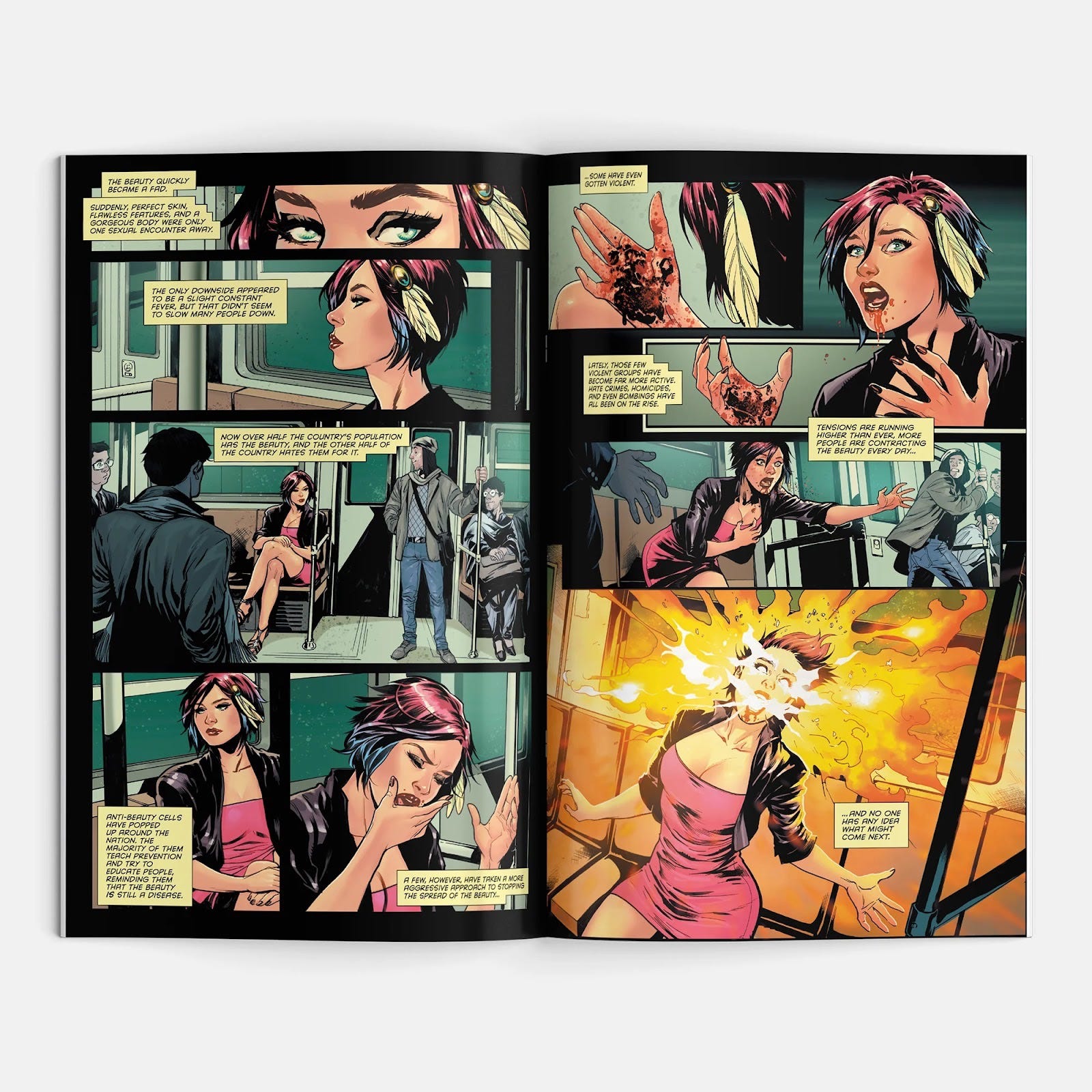
Credit: Ignition Press
As for characters, Ashton Kutcher, playing a tech CEO, is an oddly funny presence given his real-world investment wealth and past sitcom persona (and the fact that his ex-wife, Demi Moore, was the lead character in The Substance, of which everyone is comparing this show against). Vincent D’Onofrio showing up later as a counterpart becomes funny in its own right, especially when he feels like a darker echo of Kutcher’s character. Or perhaps, Kutcher is just doing a Vincent D’Onofrio impression this whole time. Watch and decide for yourself.
Hamilton’s Anthony Ramos then steals the scenes as an assassin for hire, bringing unexpected depth and menace to the show. His dynamic with Jeremy, played dutifully by Jeremy Pope, is one of the show’s strongest elements, especially as Pope’s arc becomes an unsettling exploration of incel culture. The actors’ real-life friendship translates into compelling on-screen chemistry, and Pope’s descent into something genuinely unhinged is gripping. There’s even a touch of American Psycho energy between both men, with Christopher Cross obsessions replacing Patrick Batmanesque monologues about Whitney Houston—strange, and yet, it somehow works.
What makes this Beautiful
Stylistically, the show is confident. The music choices are eerie, and the on-set locations are visually striking, chosen for being quite literally the most beautiful places in the world, known for their most romantic and high-fashion appeal. The visual language matches the story.
For callouts, episode five, in particular, delivers a sharp takedown of the artificiality and relentless pursuits of billionaire culture. The recurring device of characters being replaced by younger, more beautiful versions of themselves is a direct commentary on the wealthy and their fears about aging, relevance, and disposability.
The Beauty is not a clean or restrained series. It’s messily indulgent and occasionally uneven. Yet, it’s that chaos, juxtaposed over the source material, that makes it fun for TV. Whether that works depends on your tolerance for excess.
“I hate the way the world made me feel about myself.”
Said Jeremy Pope in episode three of The Beauty. I think that line hits the thesis of the overall comic and series. At best, The Beauty tells a story about the desire and self-loathing that commercialized beauty standards make us feel bad about, tapping directly into influencer culture and pharmaceutical shortcuts without pretending it has clean answers.
Beauty, as the show insists, doesn’t fix anything. It’s just a byproduct of making others feel bad. Viewers looking for a tight thriller or razor-sharp social critique may find the excess frustrating. But personally, I’ve always liked the comics just as I do the show for the message. Which is that everything crumbles, and infinite money and pursuit of youth can’t fix all of life’s problems.
____
You can catch episodes of The Beauty on FX on Wednesdays or read the comics by Ignition Press.

Christian Angeles is a writer and entertainment journalist with nearly a decade of experience covering comics, video games, and digital media. He was senior editor at The Beat during its Eisner Award–winning year and also served as managing editor of The Workprint. Outside of journalism, he writes comics and books.