


When I was 17, I started a band with my high school best friends called Black Water Jam. I wasn’t the best bass player, but I was great at staying out of the way. Knew even back then how to surround myself with great talent.
There was Sean, the long-haired heartthrob. He could play a guitar as skillfully as the devil could play a fiddle, with his Jimi Hendrix-esque playing ability, playing behind the head or through his teeth. Then there was my best friend, Vinny, the real deal. The most musically talented of the group, who still does this professionally for a living. Vinny could beat a stick to any rhythm. A caricature of every drummer stereotype; the kinds parents warn their daughters about. There was Gordon, the Jerseyite hockey-loving stereotype straight outta Kevin Smith movie (this was NJ), and finally, crazy Peter on keys, a guy who’d only just discovered the internet, who once stopped us mid-session to request we play our music more like Purple.
To this day… I still don’t know what that means.
We played wherever we could. Basement shows. Dive bars. Places where some of NJ’s best came out of, like the Court Tavern in New Brunswick, NJ. This was at the dawn of smartphones. When Myspace was relevant, and Instagram was new and a space mostly for hipsters.
T’was an era when New Brunswick still had a basement show music scene, just shortly after the band Thursday put the area on the map as what would become, for years, the rock-and-roll DiY basement show era of music, famous for being the place for a new band to be a lifetime ago. Messy, loud, indulgent, and a little dangerous. This was punk… well, the guys would say hardcore, but regardless, however you labeled the movement… it was real.
Eventually, I went off to college, and the band ended, and we went our separate ways. But Vinny and Sean, who hated each other before I brought em back together to play in those days… well, those guys kept going. Bigger shows. Better band. Opening acts at places like the Stone Pony and Starland Ballroom. Hell, as STATELMAN, they even opened for Saves the Day.
It was an era remembered now by just about no one, relevant only to those who lived it, in that moment of time. Central New Jersey hardcore punk scene circa 2009.
Still, I was lucky to have got to touch that world. Knew what it’s like with the late nights and stage lights and cheap beer. Smell of stale cigarette butts and that feeling you get when you see crowds of strangers coming together, dancing around to something that you and your best friends had made, and all the craziness that comes with being in a band. Once you know it. Once ya do it. Once you’ve lived it… That scene sticks with you.
That special reminder that you were alive in that moment in time.
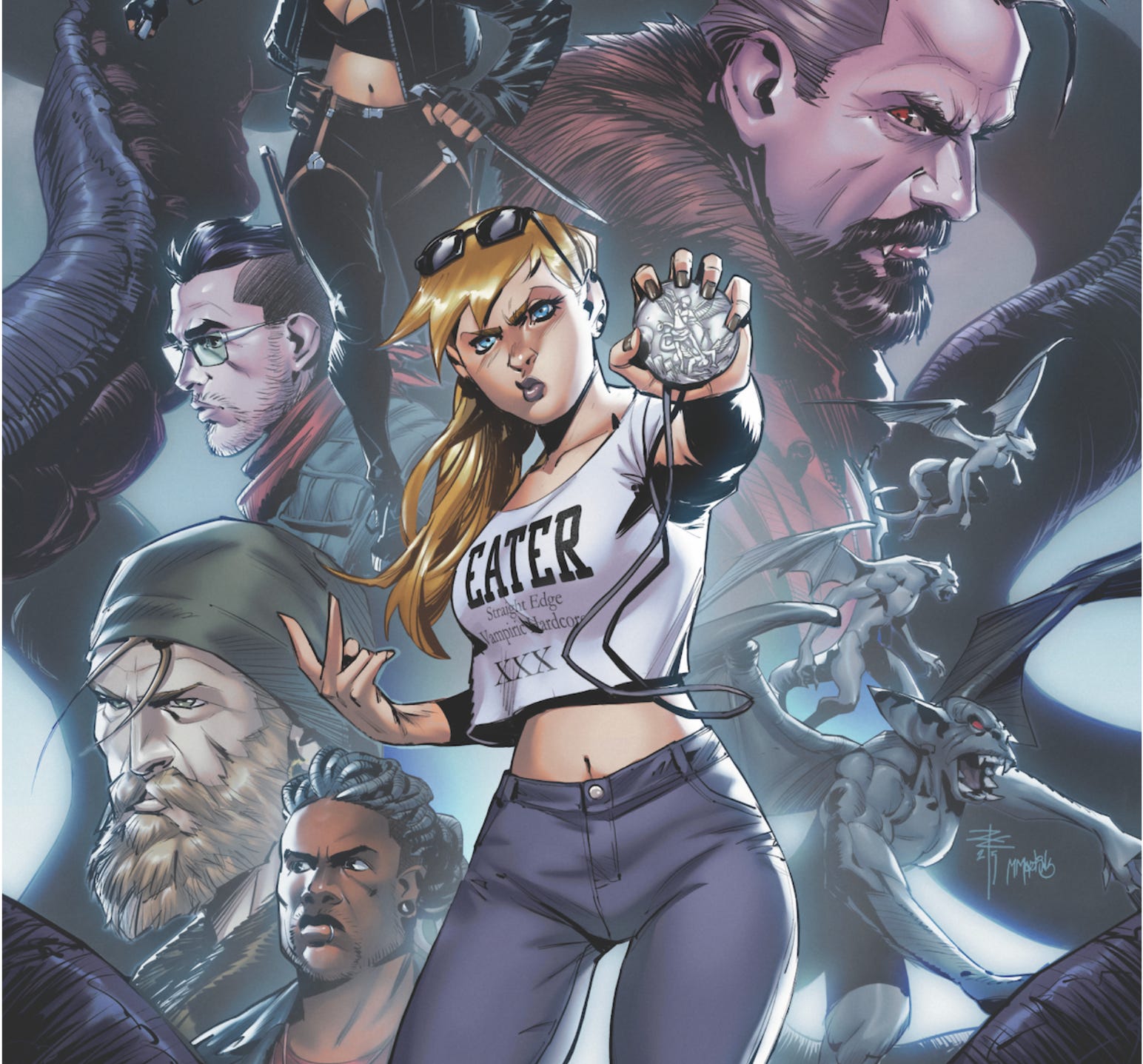
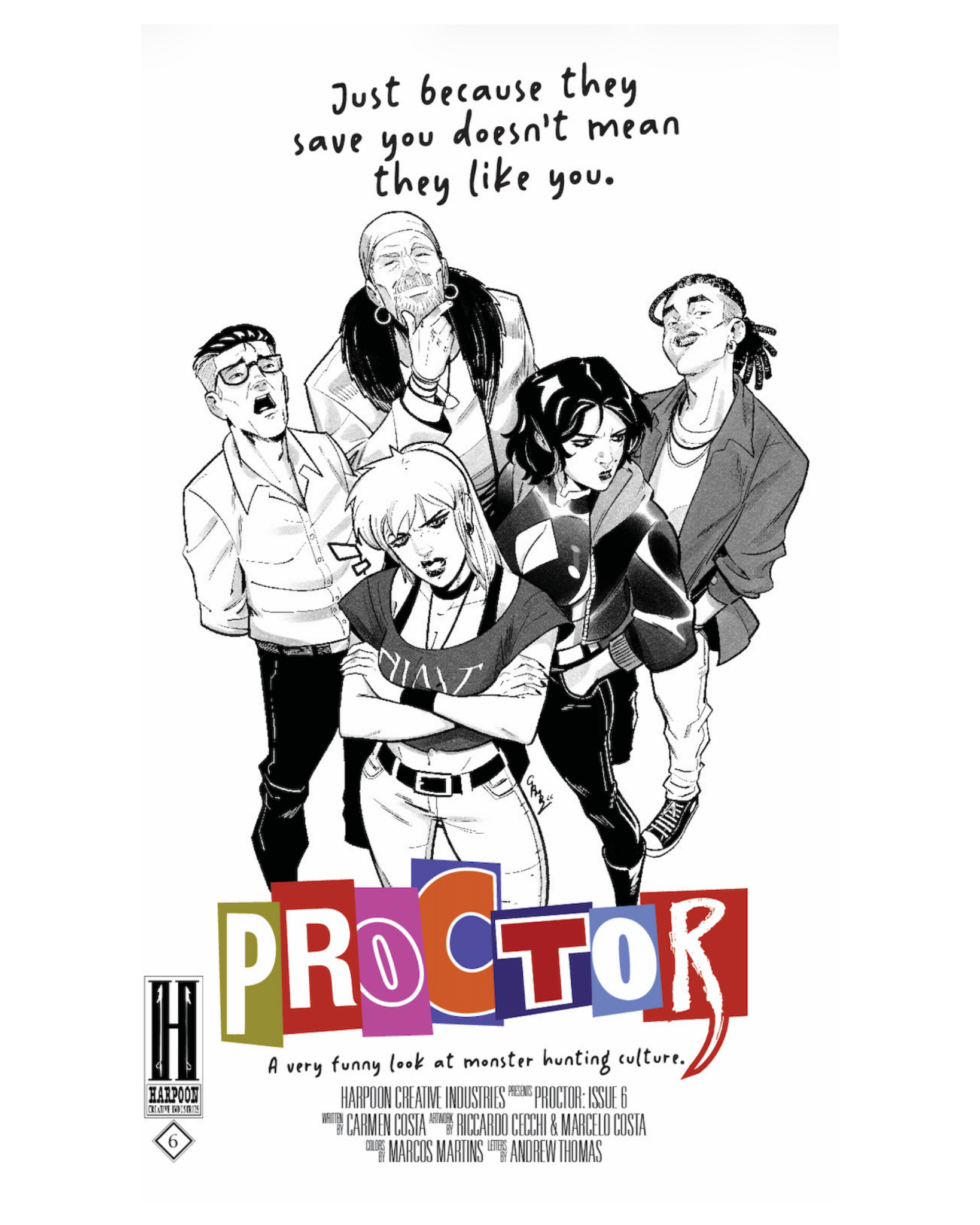
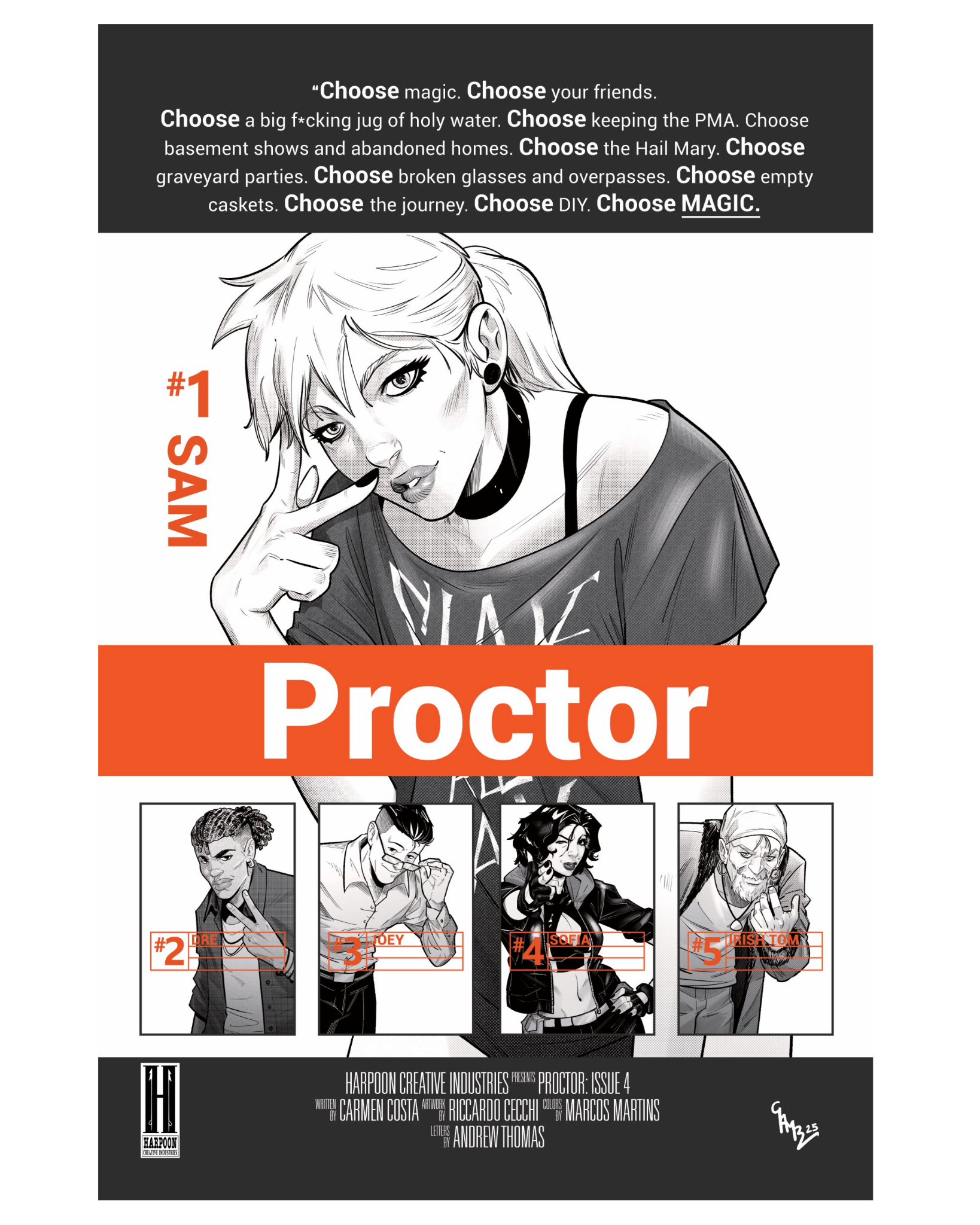
Proctor is a comic book created in the spirit of that punk scene. It’s a supernatural, punk-fueled story from writer Carmen Costa and a team of amazing artists, including Marcos Martins and Riccardo Cecchi. It’s a tale about love and loss, finding yourself, and tragedy.
With a Project we Love Kickstarter status that’s already successfully funded, you can still support the entire run for a few more days right now.
You Can Support The Campaign By Clicking Here
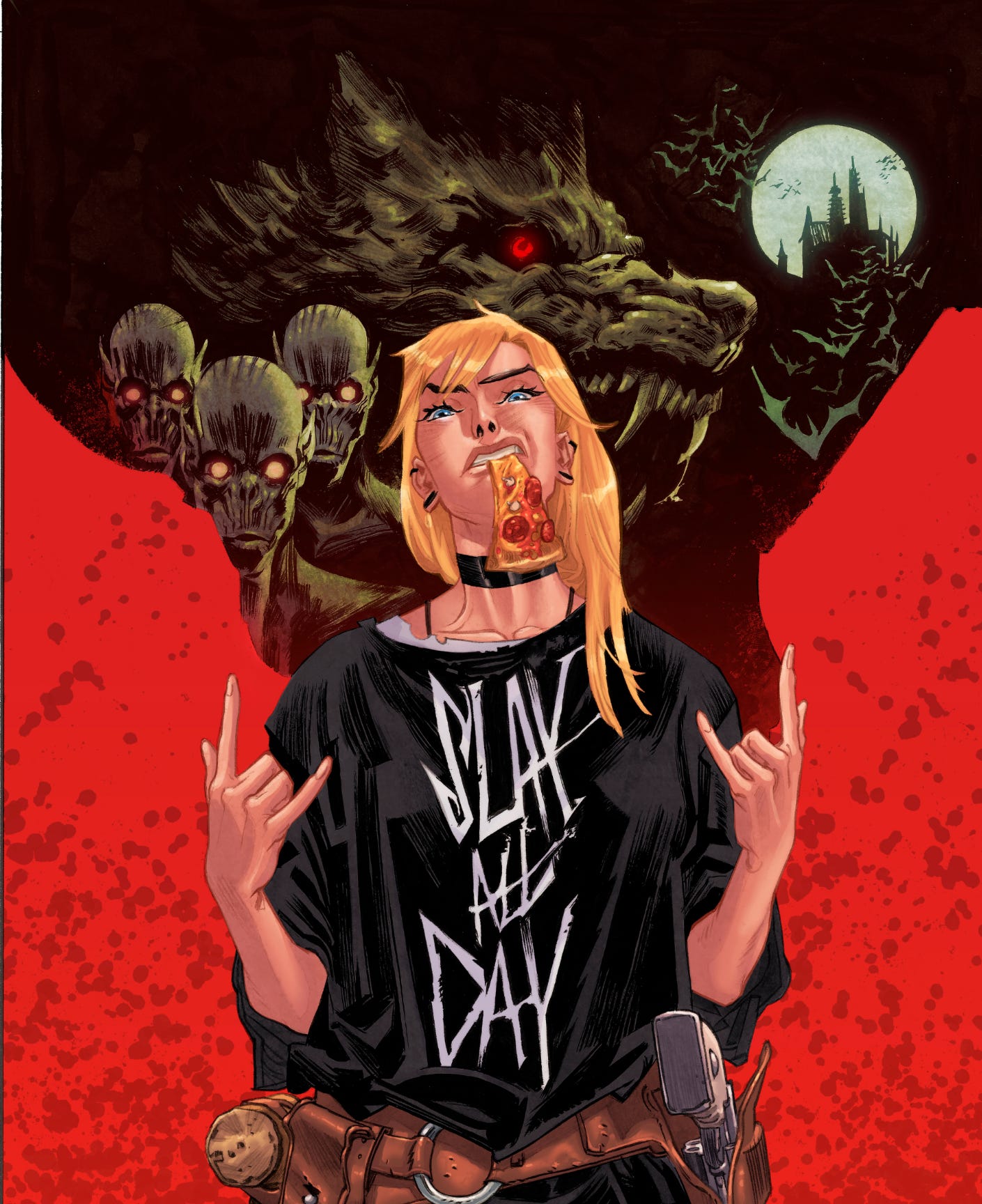
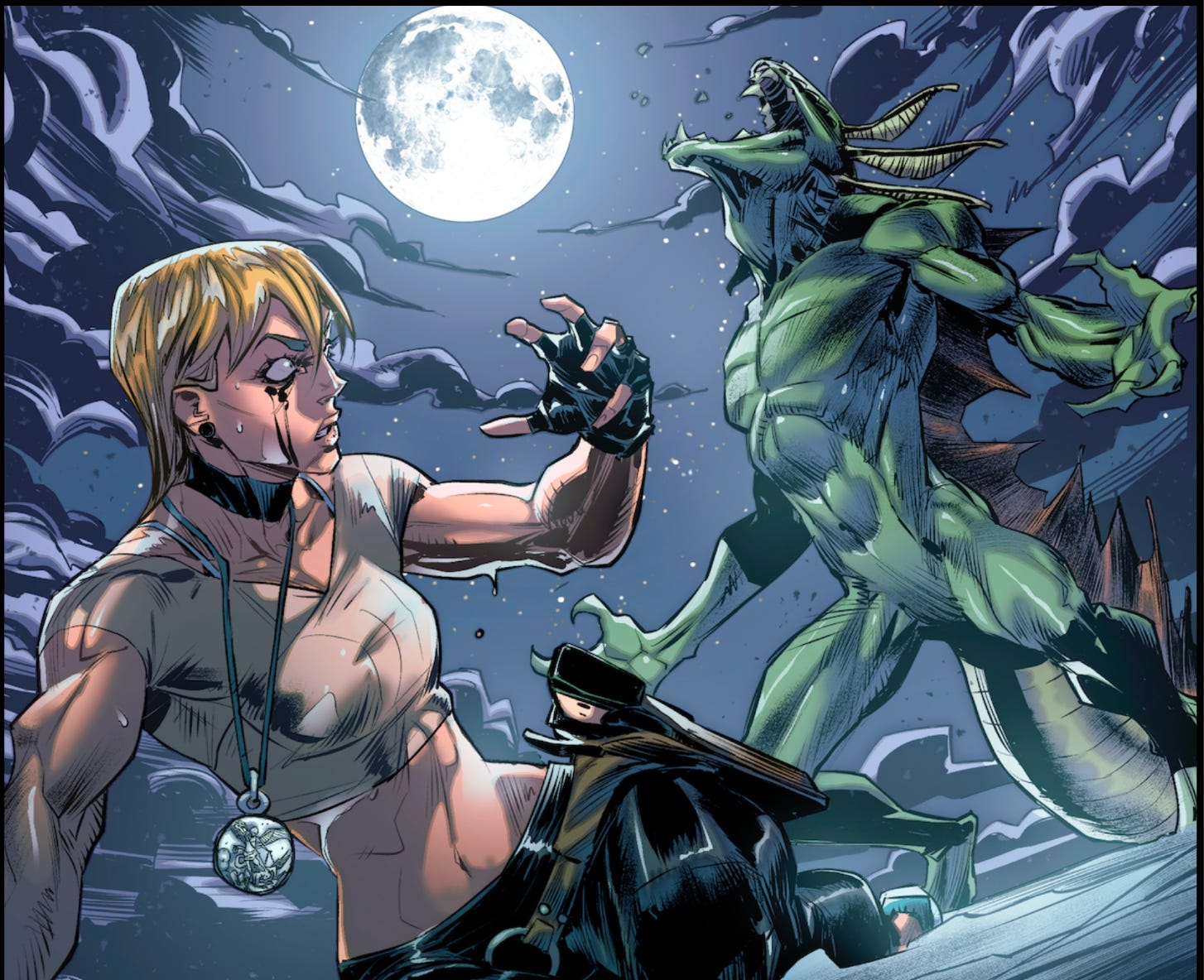
The story follows Samantha Hale, a witch/monster hunter with a past and a proclivity for loud music and late nights that carry onward to the next morning. A binge-drinking, show-hopping wild child, who’s comfortable in the chaos but still carrying a burden that is her family’s legacy. Which is when that call to action comes a calling… and it hits hard. Details below.
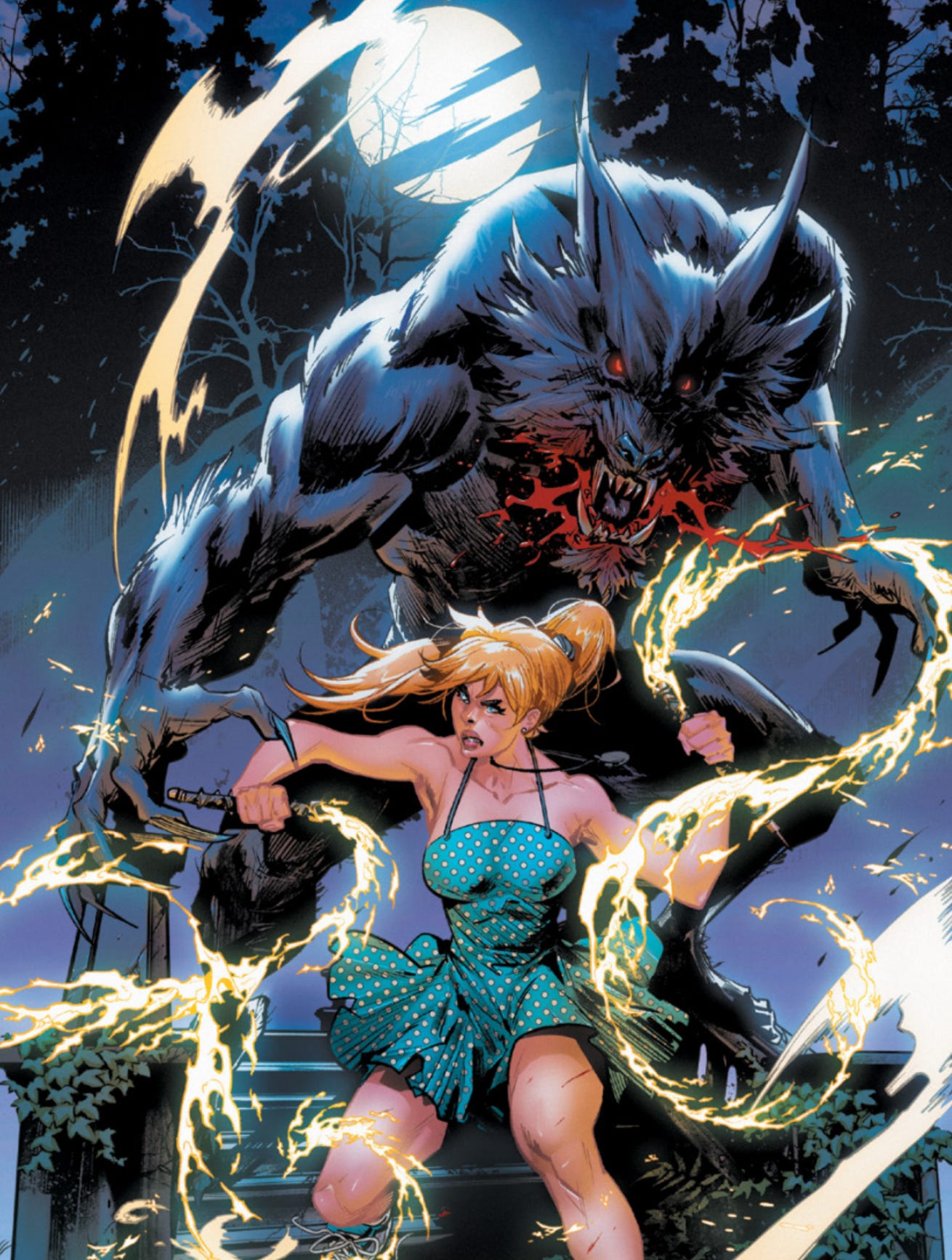
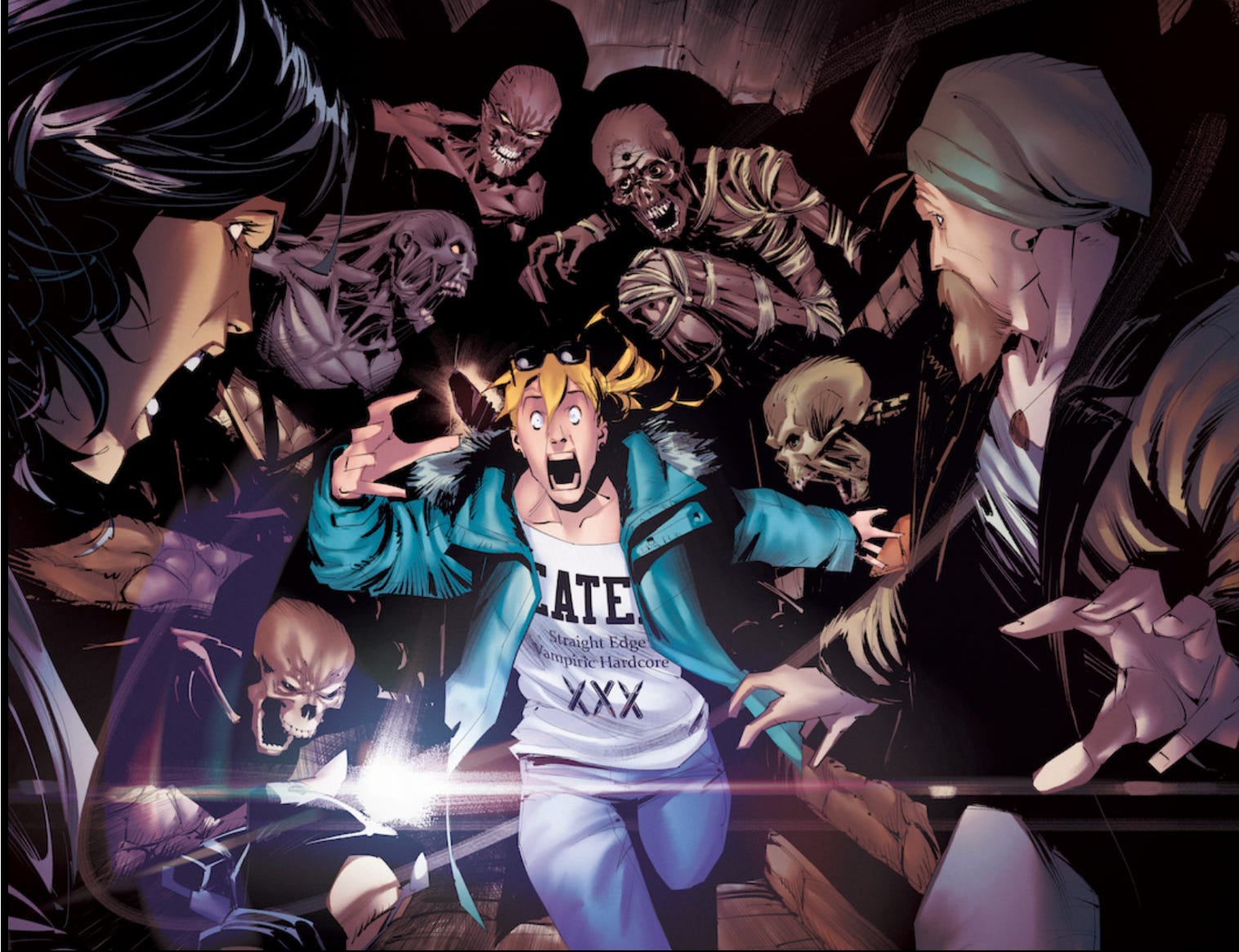
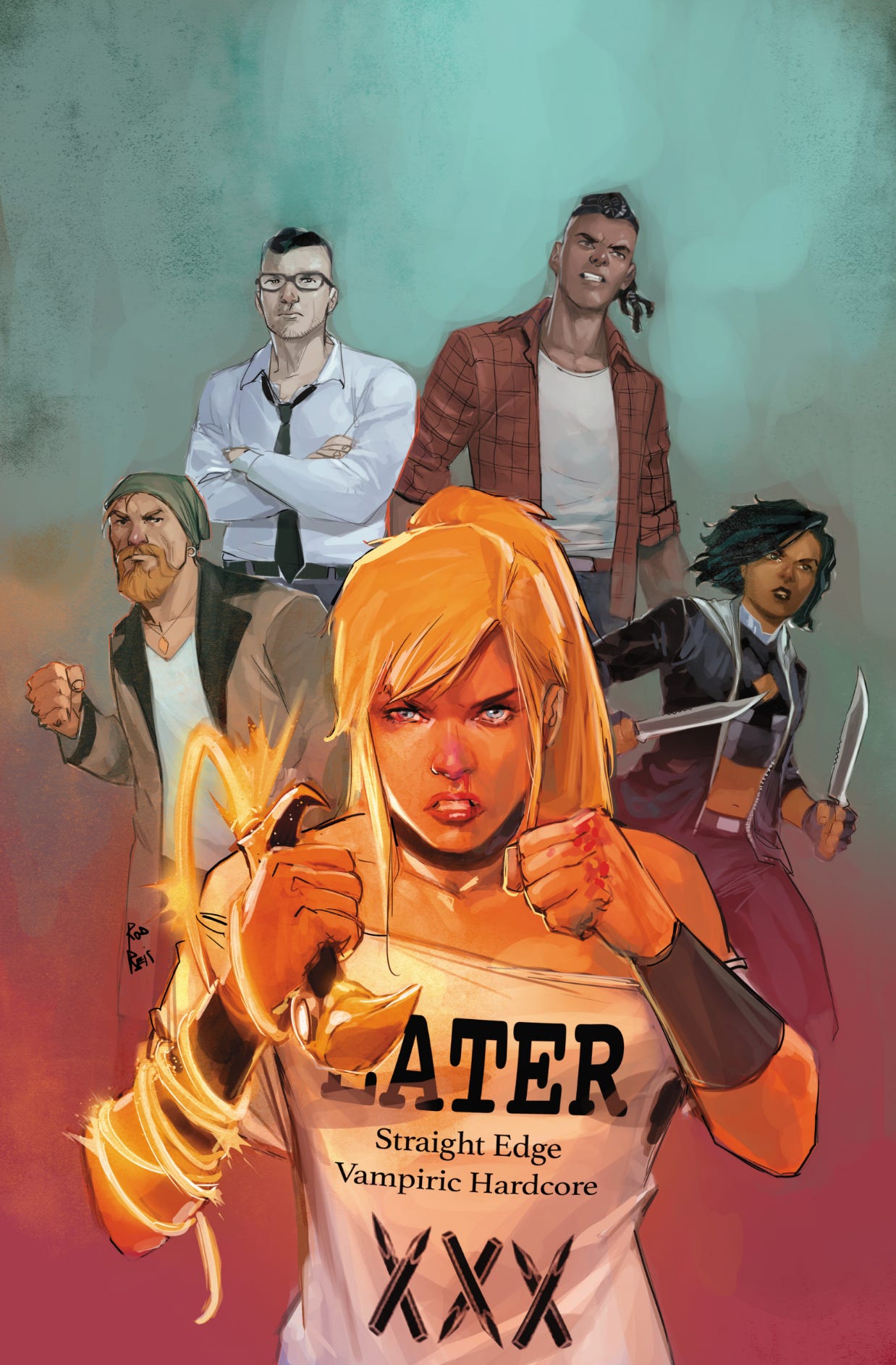
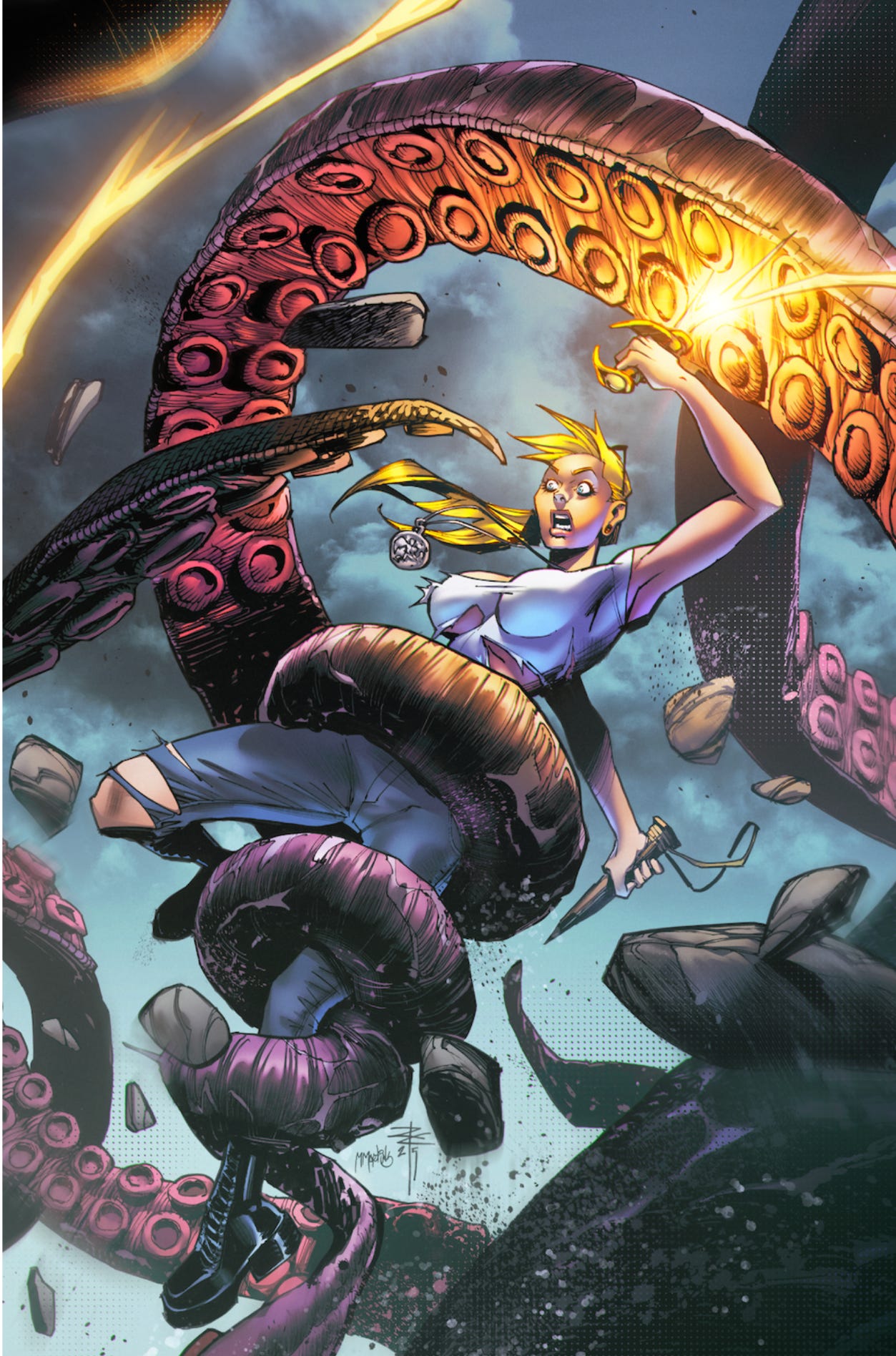
PROCTOR’s protagonist, Samantha Hale, can’t seem to get out of her own way, but what is a girl with an Art History degree and a fondness for binge drinking to do when all she’s ever been good at is stage diving and making trouble? When her mother, one of the most powerful witches in the North East, stumbles upon the ancient Staff of Kings that Sam’s father hid before he died, Sam finds herself on a globetrotting, dimension-jumping adventure in an attempt to keep the staff safe. From finding foreign help in the streets of Verona to welcoming assistance from one of the strongest Voodoo clans in history, the fate of Sam’s journey rests in her ability to swallow her pride, make new friends, and fight off the teams of supernatural assassins hot on her trail.
We sat with Carmen Costa to delve more into this universe, talk about music, and figure out just how he’d made a NJ Punk Comics scene blend with supernatural monster slaying.
This Interview was edited for clarity.
Any new additions to the Proctor playlist for this final stretch?
CARMEN COSTA: Yes, sir! I have put together a playlist of songs ONLY from 2025-2026 that will be going out to all backers courtesy of Sam. The songs lean mostly pop-punk/emo/alternative. Nothing bothers me more than folks complaining that there’s “no good music” anymore.
Listen, I love me some Tell All Your Friends, and I’ve argued that The Starting Line is one of the greatest pop-punk bands of all time; however, there’s plenty good happening right now, and I wanted to showcase that. If No Pressure’s “Wearing Thin” isn’t on your newest playlist, you’re missing out.
Now, the reason I wanted to do this is cause we came up in the same Jersey indie music scene. I respect your hustle as I see ya tabling some of the same shows I do side by side. How important was that DIY punk spirit to building Proctor?
CARMEN COSTA: It’s the MOST important part of what I do. It influences everything. I had a conversation with another publisher the other day, and we were talking about what it means to be “indie.” He almost had me convinced that we should stop calling ourselves indie labels to make sure people take us seriously.
He’s a great guy, and I understand his perspective; however, after thinking about it, I don’t think I could ever do it. It’s too ingrained in what I do and who I am, and it’s deeply influenced by the working-class background I come from.
My hands strung guitars and poured concrete and carried 4x12’s and drum kits up the famous Philadelphia Troc balcony steps (R.I.P.). Harpoon is a kick-you-in-your-teeth publishing house inspired more so by record labels like Epitaph and Fat Wreck Chords than anything that’s happening in publishing.
As a former front-man, my motto has always been: Give me the mic, and I’ll show up. I don’t need a sound check. Mix me during the first song.
That spirit is what fueled PROCTOR the minute I started working on the script.
I’d go so far as to argue that you’re taking that New Jersey punk spirit energy internationally through Sam. Was that intentional, or did it just evolve that way?
CARMEN COSTA: Well, by the design of the first issue, I guess I can say that it was intentional, but I feel like the cloth that I’m cut from has always been propped up by the support from international audiences, so in a lot of ways, it’s just a natural progression of the scene at large. I always felt that comic fans who live overseas and want to see Thursday play Full Collapse would probably also be the same folks who want to read PROCTOR.
It also helps that I’m in love with international travel.
There is a lot of that globe-trotting in Proctor. Are you pulling from real travel experience or building these places from imagination?
CARMEN COSTA: A little bit of both. I’m obsessed with the Indiana Jones series. It was so important to me as a little kid growing up poor in a very small town. My high school graduating class had 97 kids in it. I was stuck in a place so small, and the world seemed so big through that lens.
With PROCTOR, I wanted to tell a story that echoed that same sense of adventure. I think it’s one of the things that sets PROCTOR apart from a lot of other supernatural stories. Much of what I write about is inspired by the things I’ve seen.
Issue Three, for example, has Sam, Sofia, and Tom running through a catacomb in Rome. I was in those catacombs. I love train stations - it’s why you get one in that same issue (drawn beautifully by Riccardo Cecchi). I love walking through large cities and getting lost.
My wife and I recently visited Japan. A few years ago, we were in Greece. Fifteen years ago I backpacked through Iceland. Who knows where we’ll end up next, but I want fans to experience what I experienced, and I feel like you miss the smaller details that inform some of the larger parts of a story unless you’re there, wandering through an alley at midnight yourself.
Now that I’m writing this, it wreaks of privilege, so I want to say that I’ve made a ton of sacrifices in my life to ensure that I can do these things. I don’t have kids. I bought a fixer-upper in an area folks told me to stay away from. I drive a 10-year-old used Honda. My life is pretty simple outside of traveling.
I can see the 15 year old version of myself reading this back in 2000 thinking “must be nice, asshole” so I also want to say that it’s not a requirement, it’s just something that makes the writing process more meaningful to me. Also, you’d be surprised how inexpensively you can explore the world if you plan accordingly.
So this started as a book before becoming a comic. What changed? What made you realize this story needed to be visual?
CARMEN COSTA: The honest response: Failure. Sort of. I shopped the book to agents for a little over a year. During that time, I racked up almost 100 rejection letters, but I also had beta readers coming to me and telling me that they loved the story. Meanwhile, after picking up a part time gig at my local comic shop, it hit me. I loved comics. Why not turn this thing into a comic book? I made the decision that night in the store and never looked back.
And you weave these prose elements into the comic. Did that make the transition easier or did it create new challenges?
CARMEN COSTA: It absolutely created new challenges. Those illustrated short stories ballooned my production costs, and it forced me to create new and thoughtful ways to actually sell the story. More importantly, most of those chapters that I pulled the stories from required a TON of reworking. The first story, “This One Time, In Italy…” needed the least amount of work, but the second one, “The Funeral” required some serious heavy lifting. I had the most fun, though, working on the third story, “Firsts” because it was the FIRST story that I wrote outside of that original manuscript. I love writing traditional prose, so it was fun to get back to that world and work those muscles. For the volume 2 graphic novel, I will be adding a FOURTH story, and that, too, will be completely new. I don’t think I’ll ever leave prose behind. It’s why I love writing the notes at the start of the issues, too.
Now, Sam’s in that late-20s messy ‘figuring it out’ phase. How personal was that for you, and how important is the idea of second chances in this story?
CARMEN COSTA: Very. I tell people all the time, Sam is 100% me. My 20s were a mess. I was drinking a ton and terribly self-destructive. I didn’t know this at the time, but a lot of my more chaotic decisions were the result of some undiagnosed mood issues. I’m 41 now, in therapy, and seven years sober. The book, in a lot of ways, is about sifting through the sand and sorting out who you are.
As far as second chances are concerned, I really deeply believe in them. I held on to a lot of rage about a lot of things for a really long time, and I’m a firm believer now in the idea of forgiveness. People are messy, and oftentimes, things are more complicated than we would like to believe. I wanted to explore that theme with Sam’s story.
What’s it been like collaborating with Riccardo Cecchi and Marcos Martins?
CARMEN COSTA: Man… how much time do we have? It’s amazing. I owe finding them to Tim, my good buddy and the manager at The Comic Book Store where I work in Glassboro, NJ. He convinced me to enter a talent search last minute as a writer. Riccardo entered it as an artist, and at the end of the competition, the person running it encouraged the artists to post their work. Riccardo shared his pages, and under it, I wrote - “If you don’t win, this is a scam.” We hit it off shortly after, and that was that.
He introduced me to Marcos, and everything clicked. Riccardo is insanely talented and, more importantly, he has a great eye for storytelling. It was easy to make changes he suggested, and I felt like, with every page, he was getting tighter and tighter as an artist, too. I’ve told folks this before, and I mean it: He is one of my favorite comic artists of all time. Marcos is also a wizard, and there were times where I had to check my notes about colors because he was so dialed in. He would send me a page or a cover, and I would think - I didn’t write ANY coloring notes for this page, but it is EXACTLY as I envisioned it.
Working with the both of them has been a dream. With that said, I do need to say this: Riccardo had to step away from comic creation and return to the world of software engineering, which is a huge bummer. I totally understand. He’s my age and he has a family to take care of, and the salary of a software engineer is far greater than what most artists are making even working on pages for some of the top publishers. I’m bringing this up to say, we need to do a better job of taking care of our artists, and that also speaks to what fans are willing to pay for books. I’m also saying this as someone who has paid out over $50,000 to creative talent since I started this journey, and I have yet to see a dime of financial return on my investment in the project as a whole.
Publishers, writers, artists — the ones doing this at some of the highest levels — we take on a HUGE financial risk when we decide to start this journey. Riccardo and Marcos are special special people. Folks like them are making an insane sacrifice. Protect them at all costs.
A quick note: Because Riccardo had to step away mid-way through Issue #6, I had the privilege of bringing on Marcelo Costa (Radiant Black Co-Creator) to finish the middle pages of the story. I think it works well, and he was great to work with. Prior to PROCTOR, he’d come on as a colorist for another project that I’m currently shopping around.
That’s another story for another time, but I can’t wait to share it with the world.
So now that we’re near the end, I gotta say, the name Proctor really lands. How far in advance did you have that planned out?
CARMEN COSTA: That was the plan from the start. I wanted to turn “big reveals” like it on their head a bit in that, ultimately, it doesn’t change much. I speak to this a bit in the final note for the story. Sometimes, we think BIG moments matter, and for us — in the moment — they do. But in the grand scheme of things, they actually hardly ever do. I’ve been through some pretty traumatic experiences, and when you’re living them, they shake you to your core.
Then, Wednesday comes. And then Thursday. And then Christmas. And you realize that if it wasn’t that thing, maybe it was going to be something else. For me, the reveal is more of a mechanism to have a conversation about the other stuff. When the movie cuts off and the lights go on and everyone goes home — it allows me to have a conversation about the inbetween.
Sam’s mom, Clara. She’s a witch, hunter, and legacy figurehead of a mentor. Was she inspired by anyone in particular? She’s a hoot.
CARMEN COSTA: In many ways, she’s my mom. In others, she’s a mom that I’ve met before. I’m a fulltime teacher. I was one of two men in an 8 person department, and in my current role, I’m one of four male teachers in an entire building. Most of the people I surround myself with are moms. With that being said I’ve learned a very important thing: Being a mom is hard.
In one turn, I wanted to showcase the messiness that can exist in the parent/child relationship. I had a truly toxic relationship with my mom for a while. It was very hard living in my home growing up. It wasn’t until I started teaching did I develop a better perspective.
For example, you’re in a parent meeting and a mom is sobbing because of something that’s happening in school with her child. Perhaps, on paper, the parent has a resume that suggests they should have everything figured out. They have other kids who have come through the system who were never “problems” but now, here the mom is — a mess — because, suddenly, the rules have changed. They start talking about their own childhoods.
Education is the business of empathy, you know? Flash forward, and I’m at my parents’ house on a Sunday and my mom and dad are telling the rest of us stories about what it was like raising me and my brother. They talk about what it was like for them growing up. They say things like, “You think YOU had it bad? Listen to this story…” and we all just sit there, baffled. They admit to making mistakes as parents. They talk about making sacrifices. You start to realize that maybe parents are just trying to outrun something, too.
Like I said — it was really hard growing up in my house. My parents were not “cool parents.” Music wasn’t frequently played in my house. They don’t have favorite bands. My parents were not artsy. No one read or watched movies, really. I’ve never received a birthday present. But now that I’m on the other side of it all, I have a better understanding of why. My parents (and in some ways, my extended family) wanted to make sure I was prepared for what was to come.
Here’s a great example: It was hard growing up in my house, but it was also hard growing up in my neighborhood, and it was even harder working for my uncle pouring concrete. After several summers working for him, I eventually asked why he was so hard on me. He looked at me and said, “I had to make you mean. You don’t survive growin’ up in this town unless you’re a little mean.” I’m not saying he’s right, but I am saying that no one truly knows what they are doing, and most folks are just trying to sort it all out as they go based on their own experiences.
I really wanted that to come through in PROCTOR. Clara Hale is my mom, my mother-in-law, my dad, my uncle, and the tired voice of every mother I’ve had a conversation with in the teachers’ break room. In some places, I take the funniest parts of those people. In others, the saddest. Ultimately, I just wanted to honor the folks in my life who, perhaps to a fault, are just trying to do better.
That’s so true to heart, dude, and why it works. So, without spoilers, just how important are themes of family, bloodline, and legacy in shaping both the Hale and the Williams family, and the story as a whole? What’s the heart of your story here?
CARMEN COSTA: So, without echoing too much of what I wrote in the previous answers, I’ll say that those topics aren’t nearly as important as the topic of loss and trauma. I think we often overlook that topic when we want to talk about family. Most families are shaped by the more difficult moments that surround what it means to be human. There is this Listener verse for the song “Wooden Heart” that opens with, “We are all born to broken people on their most honest day of living,” and it’s always stuck with me. So I’m not so much interested in the topic of family or legacy as much as I am about the answer you get when you ask: what happens to a family when something shakes it to its core? We want to believe that the family can overcome all of the trauma, but at 41, I’ve learned that that’s rarely the case and, more importantly, it’s okay that such is the case. All you can do is move on and do a little less damage to the ones you love than the folks who came before you did to you.
I love how each issue opens with that burst of monster chaos before settling into character. The non-stop energy of the pacing has a punk vibe. Do you agree?
CARMEN COSTA: It does, but to be completely fair, the idea was taken from a less (or more?) obvious place. I love the opening scene to Raiders of the Lost Arc. It captivated me as a kid. That’s all I was trying to do. Now, with that said, Indiana Jones is SUPER punk rock, so I guess that’s perfect, haha.
Very. I still feel like the Jersey DNA in this book is real. The hardcore punk scene, bars, and attitude. It feels like a time capsule of that 2007–2009 having grown up in the thick of it myself. How intentional was that?
CARMEN COSTA: Very. More importantly, growing up in the scene in 2002 — which was probably the height of my involvement as a teen — there was nothing worse than the inauthenticity I saw, too.
With PROCTOR, I wanted to make sure that there were details floating around that helped cement the Philly and South Jersey scene into Sam’s universe one way or another. It’s one of the reasons why EATER, the fictional band in the story, exists. I wanted to make Sam a character that you would meet at a show. With the things she says and how she says them, I wanted to make sure readers felt like they all knew Samantha Hale in high school.
With that being said, even characters like Irish Tom bring their own punk energy without being overtly punk. I didn’t want anything to be overkill. In the back of my mind, I always have Anti-Flag’s “Captain Anarchy” and Say Anything’s “Admit it,” playing. There’s a fine line you have to walk.
I say all of this to say, someone will absolutely call me a poser for publishing this book. I totally understand, and I totally deserve it hahahaha. Such is the scene, but at least it keeps us honest.
Alright and finally, For someone jumping in now—why Proctor? What are they getting that they’re not finding anywhere else?
CARMEN COSTA: PROCTOR is not a gimmick, and this publishing journey that I’m on is not a hobby. I am not “giving this a shot” because I think comics are cool. I am trying to say something profoundly meaningful about living.
I am building a legitimate, indie publishing business that echoes the same energy as the punk music labels I grew up on. I am working diligently to make sure I am paying artists a living wage. Sam Hale, the protagonist of this story, saved my life. She helped me learn how to forgive, and I have a better relationship with the people in my life because of her and this story.
I wanted to create a special place in this world for folks, especially for those who feel like they are lost at sea. There are some comics that are the equivalent of eating a potato-chip. They are fun. You get to chuckle. You move on. This is not that book. Trust that I am trying my best to say something meaningful. I’ve been to too many funerals, and I managed to find peace creating this world. I just hope you can find some, too, by visiting it.
There are only a few days left to support Proctor on Kickstarter. If you’d like to check out the series, check it out below.