

Interview: Katia Vecchio on Overcoming childhood trauma with MEMORIES OF GISELLE
What happens when fragments of the past begin to surface?

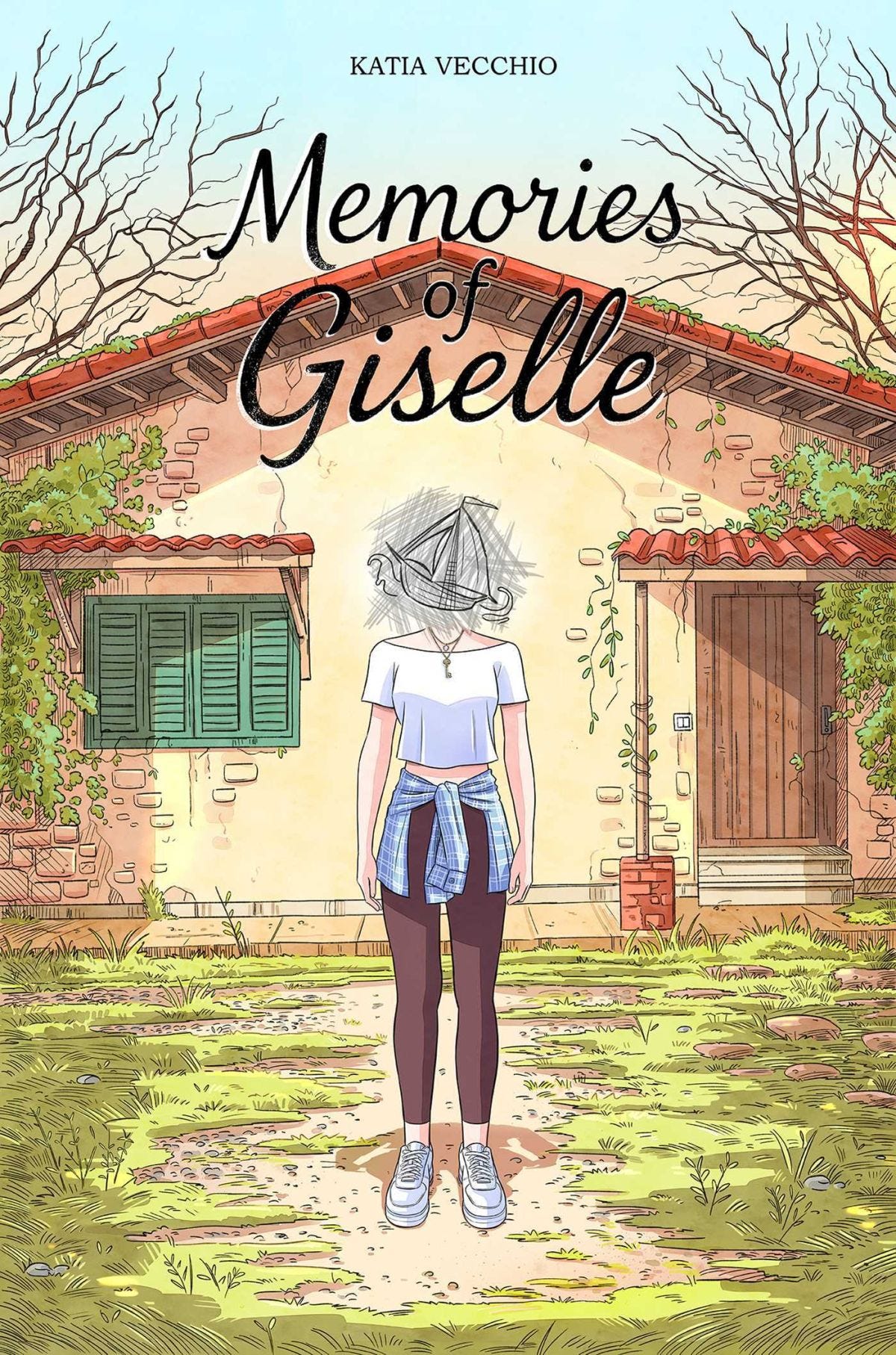
We cover a lot of weird, brilliant, and messed-up stuff at The DeMonster, but every so often, someone I actually know drops a book that hits in a completely different way. That’s the case with Memories of Giselle, the debut graphic novel by my friend Katia Vecchio, available in stores on June 17th.
A coming-of-age story about a young woman piecing together her life after a childhood shaped by trauma, this is a slice-of-life story carried by art that’s equal parts tender and, as it is, quietly grim.
It's like a depiction of a forgotten memory, with artwork that is strikingly beautiful and colors that feel like Ghibli meets Richard Linklater films, in that they’re equal parts vibrant and surprisingly cinematic. I also really liked the use of shading and negative space to build atmosphere in this one, with rooms themselves heavily defining emotional tone.
Now, for context, Katia and I met because she’s actually the artist on BEAUTIFUL, my comic book spinoff story about Brandi the Succubus and sequel to The Tomb of Baalberith. I’ve seen how Katia creates art using emotional beats, body language, and those tiny facial expressions that say everything without uttering a word.
Watching her channel that same precision into something this personal of a graphic novel that’s been long in the making is wild to me, and obviously, I wouldn’t have hired her if I didn’t think she is going to be a big voice to come for this next generation.
Similarly, for readers who don’t know: comics run in the Vecchio family. Katia’s sister is Luana Vecchio, creator and artist of the cult-hit horror series Lovesick. About a decade ago, the two of them even teamed up on a Webtoon Canvas comic called Purple, which landed a spot in the Superhero Comics Contest hosted by Stan Lee and POW! Entertainment.
Below is an exclusive conversation with Katia and I about how Memories of Giselle came together, what it means to draw trauma, and how you survive making your first full graphic novel and come out the other side. We talk process, vulnerability, why comics are uniquely equipped for this kind of emotional storytelling, and yeah—what it’s like putting something this intimate into a medium that traditionally loves Big Two superhero theatrics.
So, with that said, here’s our exclusive interview with Katia Vecchio.
Edited for Clarity
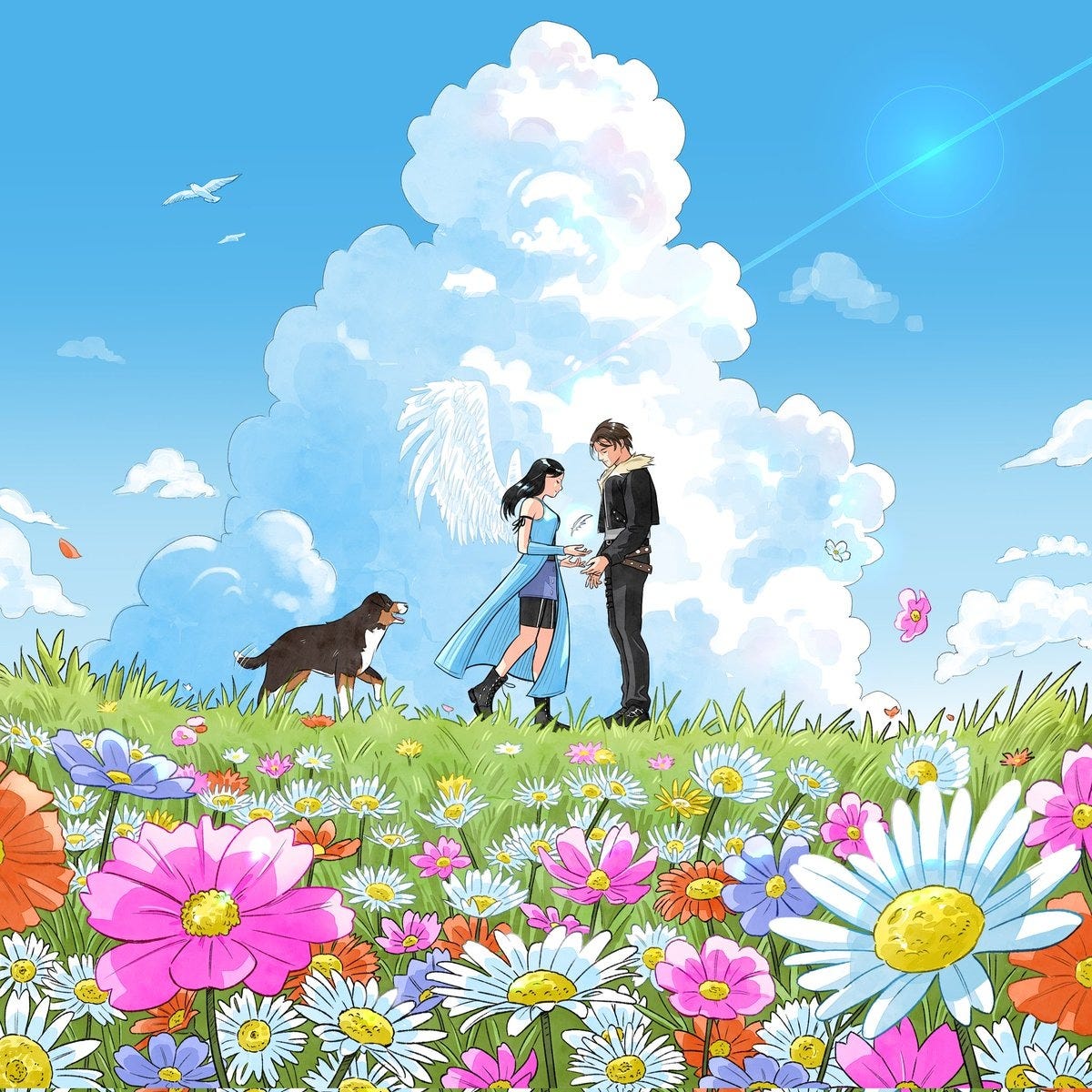
Hi Katia, thanks for doing this! Besides our book that I’m super excited about, I’ve been a big fan of your art style since finding your Final Fantasy 8 fan art piece online (It’s my favorite video game!). Now, I notice that you and your sister use somewhat similar art techniques, but I do think both of you have distinctly different art styles. Tell us about how you developed your art style over the years?
KATIA VECCHIO: Hey Christian, thank you for the interview! Final Fantasy VIII is my favorite game too!
I think growing up together naturally led my sister and me to share some techniques, but over time our influences and interests shaped our styles in different ways!
I’ve loved drawing ever since I was a child because I was really into cartoons and anime—I was fascinated by animation. When my sister and I were kids, we used to come up with our own comic stories, drawing our characters on paper and then reading their lines out loud (we didn’t even know what balloons were yet!).
As for my art style, I’ve always been influenced by what I see and what I read. Over time, I’ve read a lot of European, American, and Japanese comics, and I’ve always paid close attention to the artists whose line work I admired the most, letting their work influence me—especially manga artists.
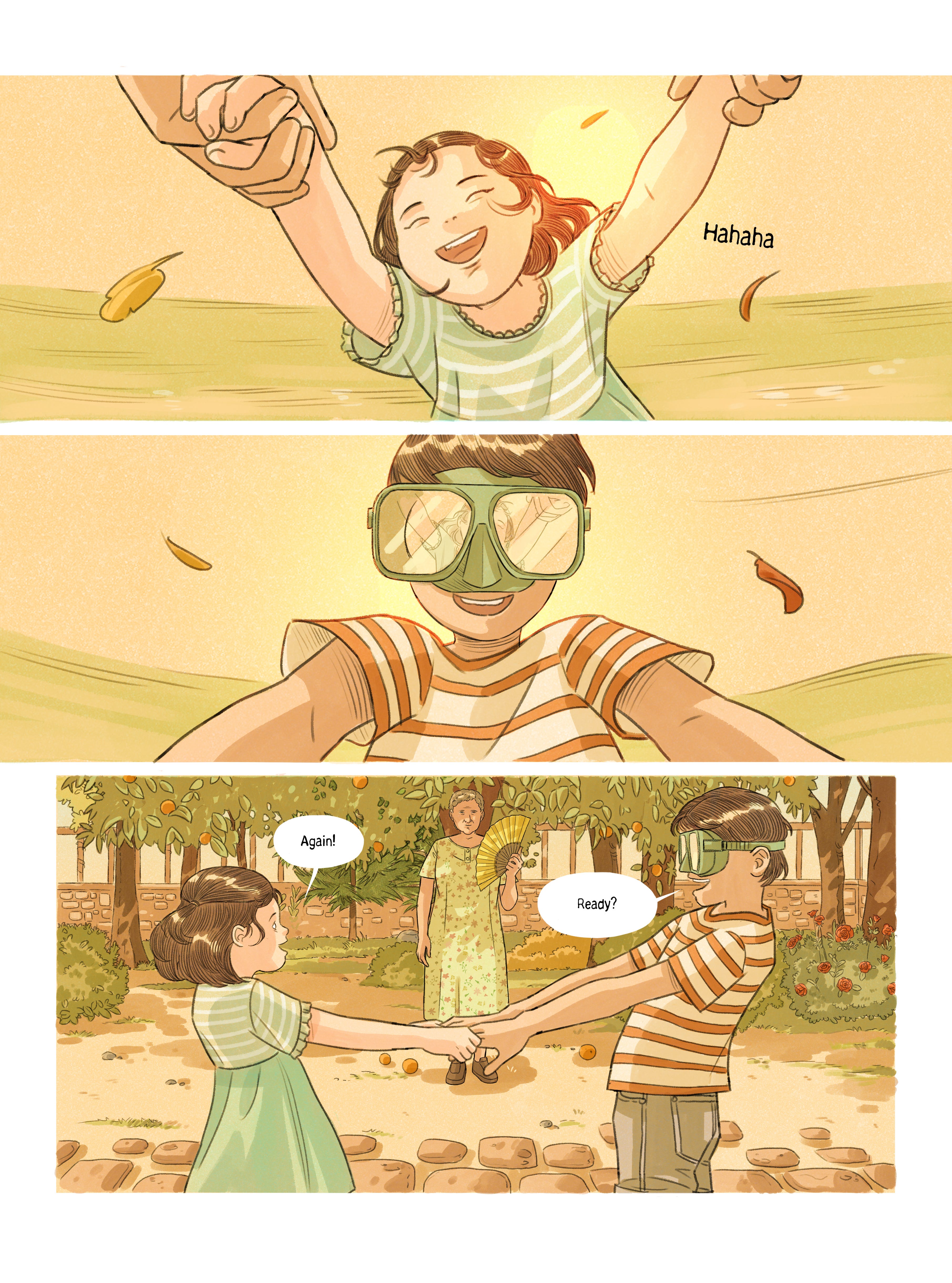
Now, you’ve described Memories of Giselle as a story that deals with memory and trauma. Tell us more about it. What is it exactly?
KATIA VECCHIO: It’s a story about adolescence and family relationships, but above all, it’s a story about growing up and the emotional weight of trauma that a person carries throughout their life. I wanted to explore how certain experiences can remain silent and almost invisible during childhood, only to resurface later in life in ways we don’t understand.
The book is about this transition: the moment when growing up means confronting what has remained unspoken and learning to face it, rather than letting it define you.
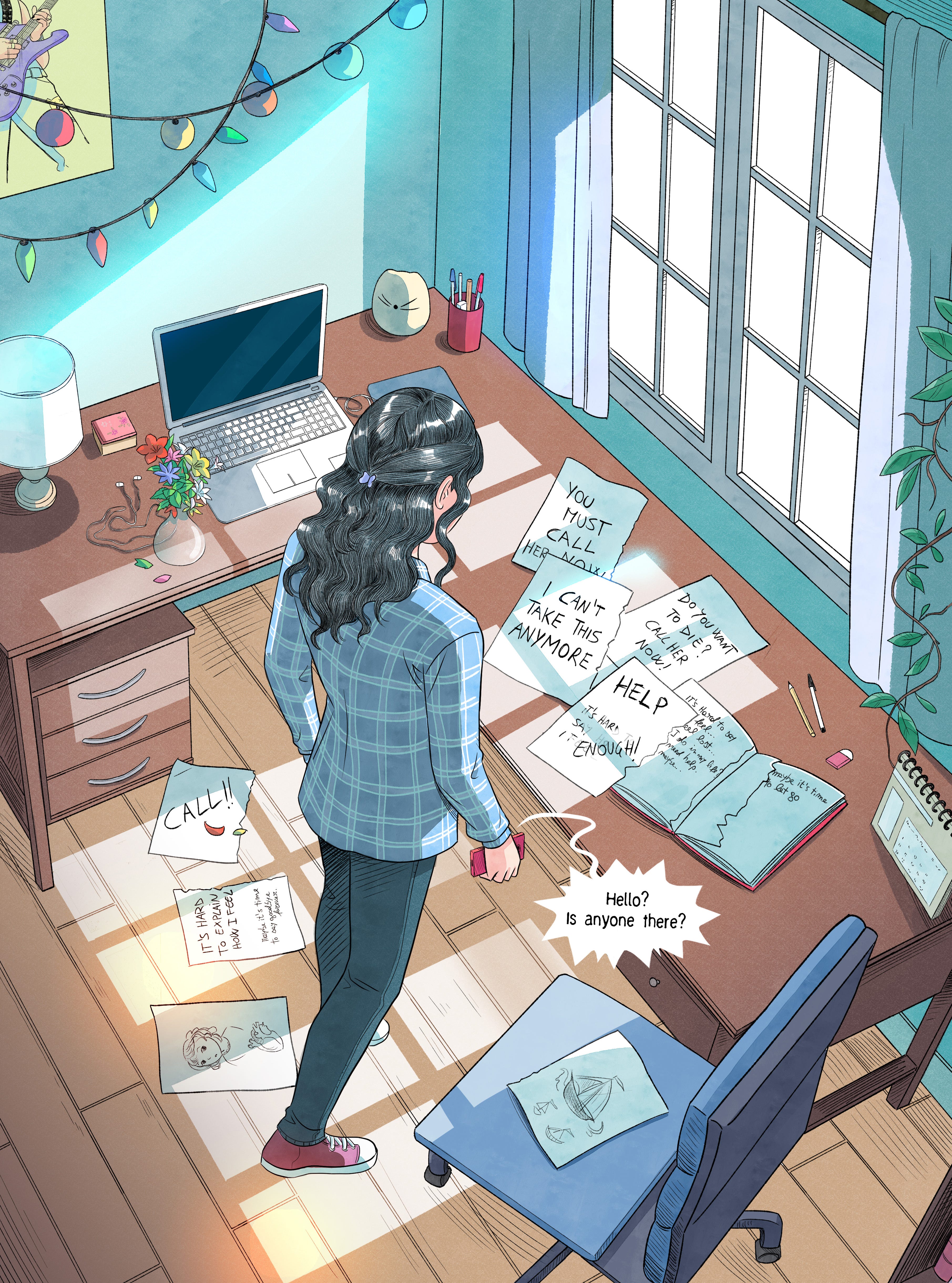
Talk to me about the art? What was it like to draw this, as I’m a huge fan of your color work, but also the sentimentality I find in your style. It’s soothing. And sweet. And… sad. Your art makes me feel a lot of things I don’t normally. I hope others feel this way too.
KATIA VECCHIO: I’m really happy that my art can evoke emotions—it’s always my goal. It means a lot to me that you felt that way.
Choosing the right colors based on the feelings I want to convey in each moment is very important. I love using light blue tones because I feel they give a more emotional atmosphere to a scene.
The most challenging part, though, was drawing the characters as they grow—changing their proportions without losing their visual identity and keeping their distinctive features. Since it’s a coming-of-age story, it was important to clearly show the passage of time without confusing the reader.
I think there’s something beautifully honest in every piece I’ve seen you create. Like an innocence lost to harsh reality. Do you use mood boards or color scripts? Is this style that you use just instinctive? In fact, did you have artistic influences that inspired you for this?
KATIA VECCHIO: Thank you so much! I usually create folders where I collect photos and images I like, letting myself be inspired by certain details and then building the final image in my own way.
For the backgrounds, I drew inspiration from European landscapes or from photographs I’ve taken myself; for example, Giselle’s home in the countryside was inspired by my parents’ old house.
As for color, I’m heavily influenced by Studio Ghibli (I’ve lost count of how many times I’ve flipped through their artbooks!), and by anime color palettes in general.
I love the art and colors of Jordi Lafebre, the dramatic and poignant framing of Inio Asano, and the expressiveness and humanity in the characters of Naoki Urasawa. They’ve all been a huge source of inspiration for me.
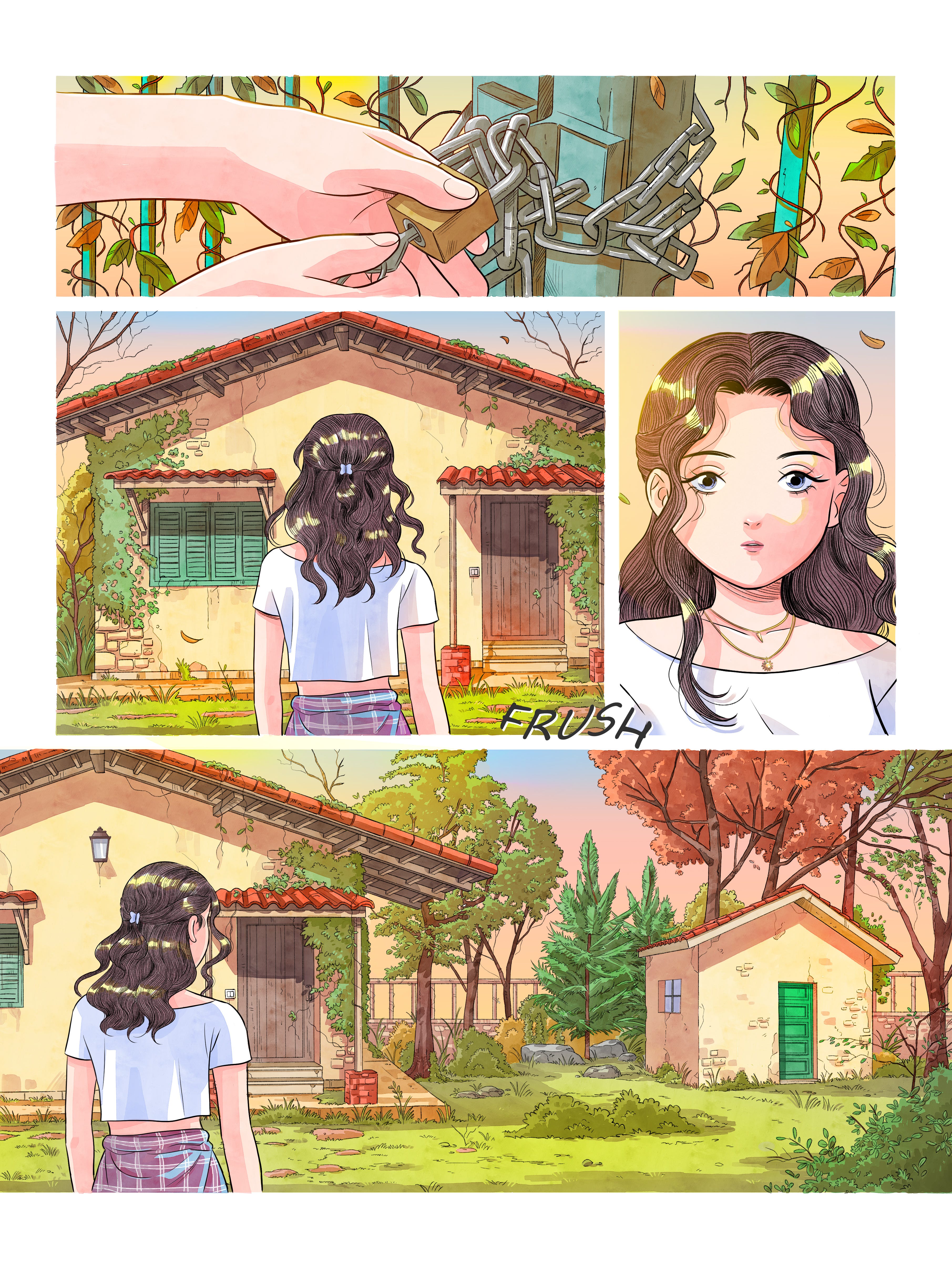
Is this book considered a memoir? How do you balance the need to depict the personal experience of your story versus the need to drive the narrative forward?
KATIA VECCHIO: Some scenes in the book are inspired by real events, but I wouldn’t consider it a memoir. I’ve always loved slice-of-life and dramatic comics, so when I started writing the story, I immediately knew I wanted to draw from personal experiences to develop it and bring as much humanity into it as possible.
For me, it’s important to bring a sense of humanity into the story, and drawing from something personal—whether it’s a feeling, a memory, or an observation—helps me connect more deeply with what I’m creating, and makes the emotions and feelings I want to convey feel more authentic.
Is this your rawest work to date? Did you need to set boundaries or just sit in the dark stuff for the work to feel real?
KATIA VECCHIO: To be honest, the desire to tell this story was stronger than any hesitation or fear. As I kept writing and adding new elements, I found myself increasingly eager to move on to drawing the pages.
I’m aware that the book deals with very sensitive themes, but for me it was important to approach them with care and honesty, rather than holding back. What mattered most was staying true to the emotional core of the story.
Finally, who are you speaking to with this book? Is it for people who’ve been through similar experiences, or are you creating empathy for readers who maybe haven’t?
KATIA VECCHIO: I’d like this book to be for everyone. But especially for those who feel lost or still feel anchored to the past. I wanted to offer them a sense of hope, even if only for a moment—something that might stay with them after reading.
Bonus Question. You excited to work with me? Beautiful is… so silly compared to this book. I can’t believe we’re working together.
KATIA VECCHIO: I’m incredibly excited! And I’m having so much fun drawing all the action scenes (you already know that!).
Thank you for giving me this opportunity—not just for the interview, but also to work together on Beautiful… and for letting me draw all these badass female characters. But I won’t say anything more! 🤫
Memories of Giselle is going to be published by Image Comics. It’s on Final Order Cutoff on May 11th, 2026, so ask your Local Comic Book Store to order your copies now. The book will be available in Comic Stores everywhere starting June 17th, 2026.
Thanks for reaching out. If anything comes open in the future I would be honored
Hey i love your page, is there a way I could possibly get an interview as well?