

"The Girl Called Cthulu" On Minky Woodcock with Cynthia Von Buhler
Authenticity grows from embracing the obsessions that light up your imagination

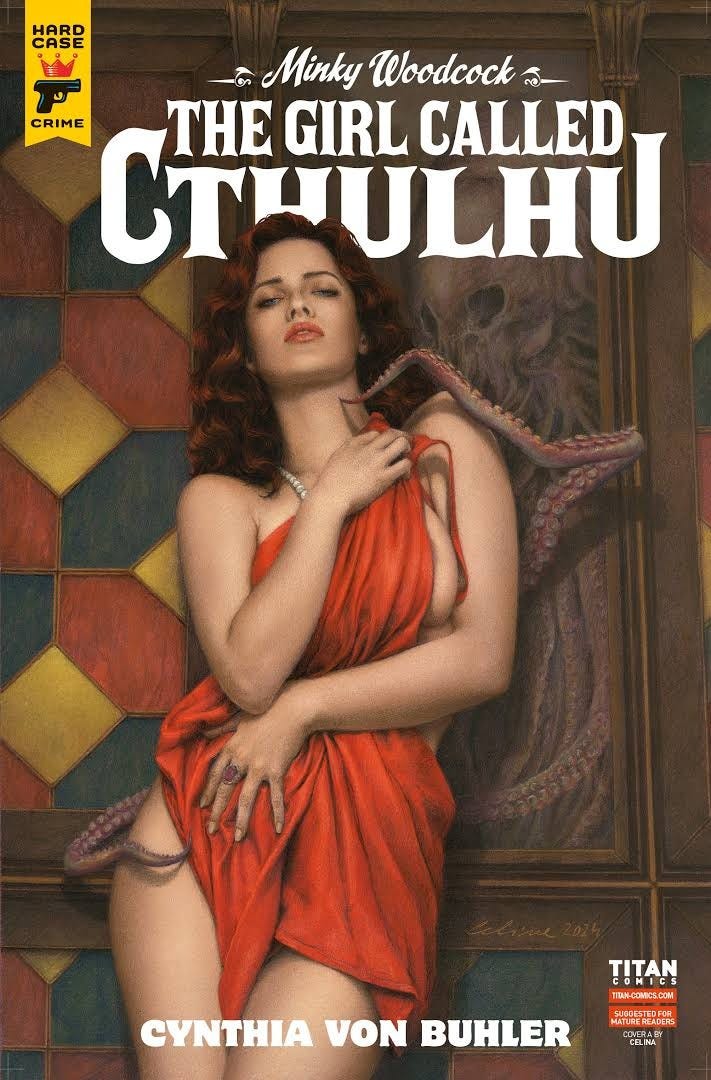
Cynthia Von Buhler is an artist. And I mean that by every sense of the word. Illustrator, writer, immersive theatre performer, animal activist, and producer; she’s got one hell of an unbelievable history, but for this piece, we’re focusing on her comics career.
Buhler is the creator of the expansive Minky Woodcock series of graphic novels published by Titan. A series that combines sexy detective noir, occultist intrigue, and forgotten histories into something unmistakably her own.
Her latest graphic novel, Minky Woodcock: The Girl Called Cthulhu, plunges into the occult machinery of World War II, where espionage, ritual, and Lovecraftian dread collide.
I spoke with Cynthia… first, on a boat, and then, in this interview, where we talked about history, sex, cosmic fear, and the power of women rewriting the narrative.
This interview was edited for clarity
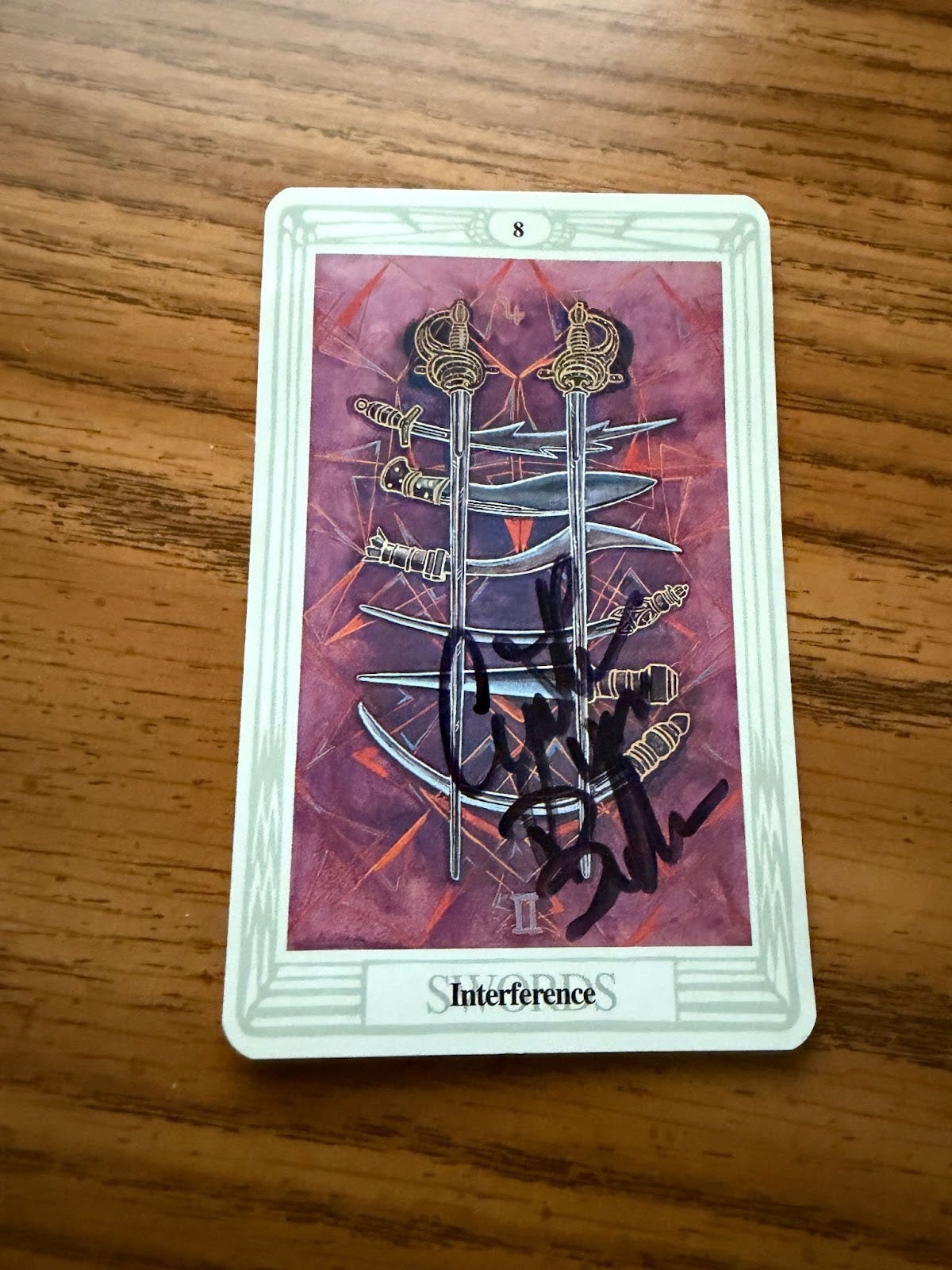
We met last month at your party, where you gave me a tarot reading on a boat. I pulled the Eight of Swords, the interference card, but you noted it was reversed. You told me that if I pushed through, I’d find what I was seeking. And, well… I did.
This is it. New job. New role. New chance to meet my destiny. Strangely, I’m here because I felt aligned with the universe. So, as thanks, I wanted to start this interview with that moment. My being at The DeMonster is in no small part due to our meeting.
Thus, my first question is this….
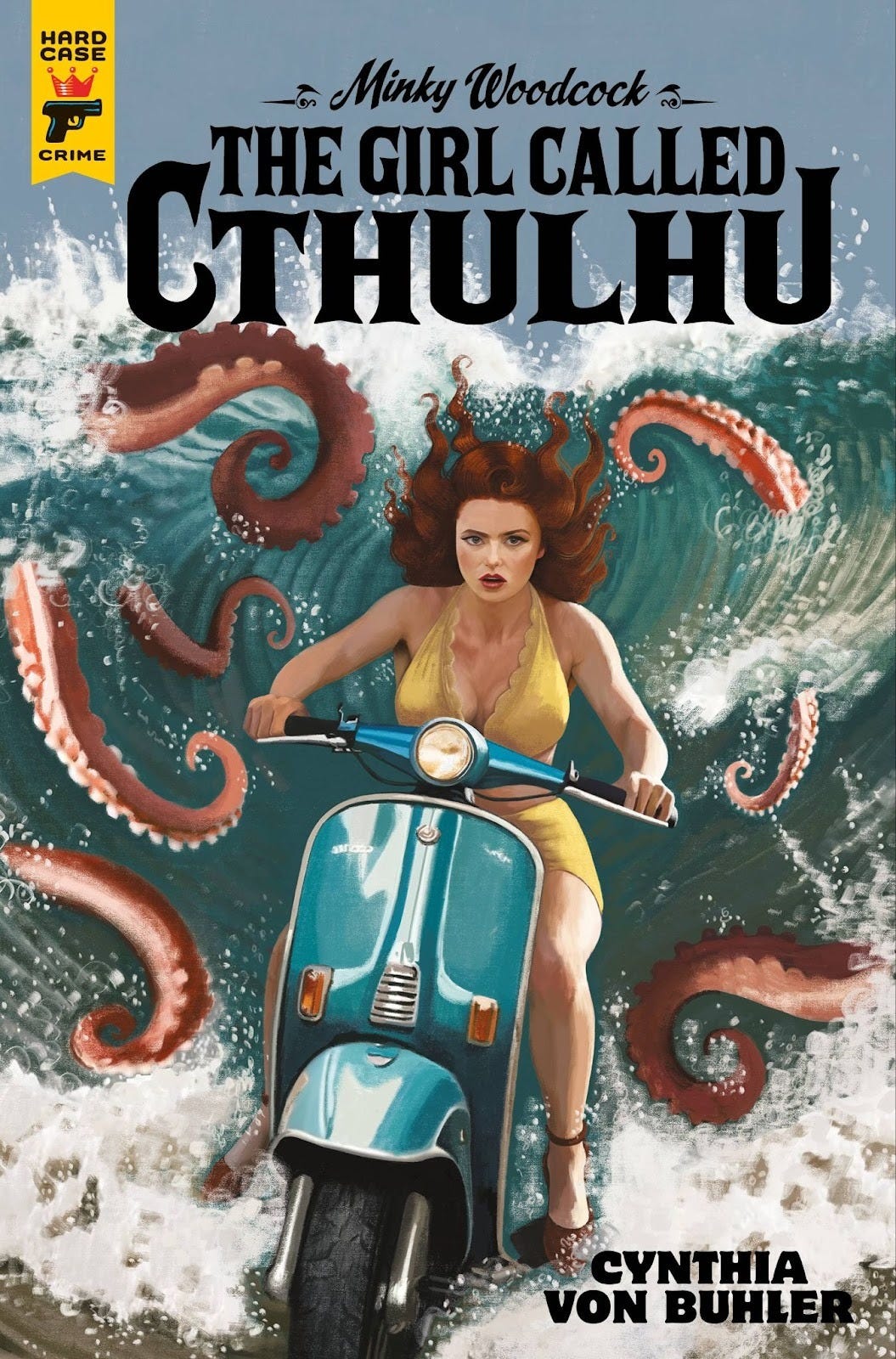
Do you believe in destiny and the whims of the great unknowable? Or are we truly whom we choose to be?
CYNTHIA VON BUHLER: Destiny isn’t a cage. It feels more like a drafty old theatre: the set may be built, and the lights may be hung, but we still decide how to move across the stage.
World War II is the perfect backdrop for that question. The era was soaked in superstition, propaganda, ritual, and fear, yet it was also a time when individuals made decisions that reshaped the world. My belief sits somewhere between those extremes. There are hidden pressures—political, psychological, and bureaucratic—that nudge us along. But willpower, bravery, and plain stubbornness can push the story in a different direction.
Minky lives in that intersection. She understands the shadows around her, but she refuses to let them decide who she becomes.
Who is Minky Woodcock, what is she based on, and what should readers know before diving into The Girl Called Cthulhu?
CYNTHIA VON BUHLER: Minky Woodcock is my fearless, cunning, historically grounded private investigator. She moves through history’s darkest corners wearing heels as sharp as she is. She’s inspired by the real women of the early twentieth century whose intelligence and courage were pushed out of official records: spies, adventurers, undercover performers, and codebreakers disguised as clerks.
Before starting The Girl Called Cthulhu, readers should know that this volume places her inside the occult machinery of World War II. The story blends real espionage, classified operations, Aleister Crowley’s volatile orbit, and the dreamlike dread of Lovecraft. It may read like fantasy, but it is built on years of research and true historical oddities that are stranger than fiction.
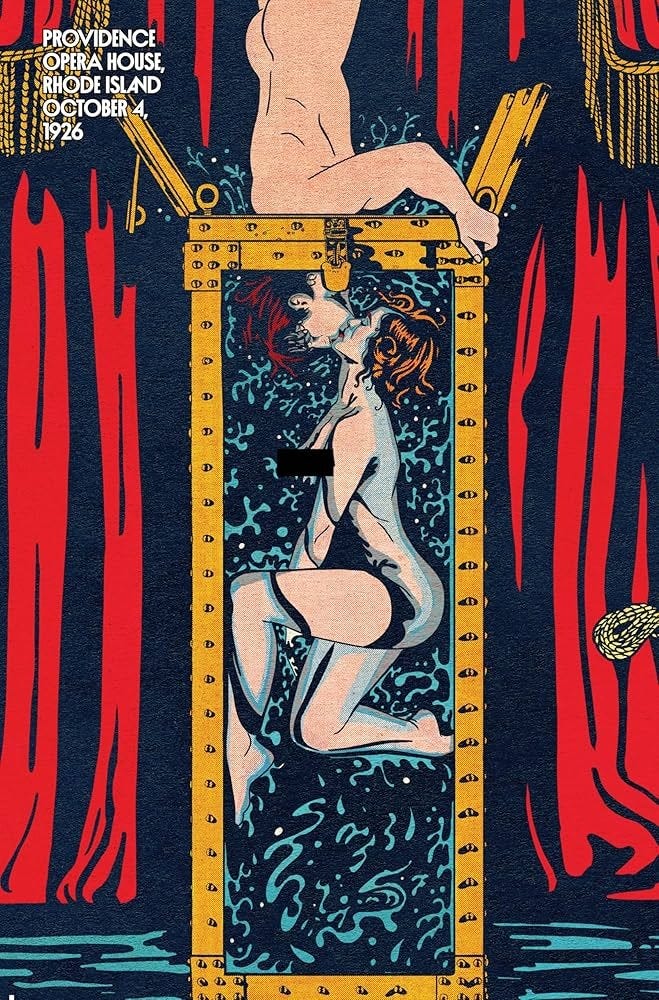
Your book opens with H.P. Lovecraft visiting Harry Houdini, both in connection to your Minky Woodcock stories, but also, actual history. Anything you learned about the two men’s collaboration over time?
CYNTHIA VON BUHLER: Their collaboration is real. Houdini hired Lovecraft as a ghostwriter, first for “Imprisoned With the Pharaohs” and later for a nonfiction project titled “The Cancer of Superstition”. Only about thirty pages survive because Houdini died before they could finish it. “The Call of Cthulhu” was written in early 1926, two years before Houdini’s death, which means Lovecraft could have shown it to him. Houdini was a devoted reader of Weird Tales and even had his own column there. Their partnership offers a perfect doorway into a story shaped by illusion, propaganda, and cosmic fear.
You portray women in such a strong light, seeing them navigate through the dangers of the era. Why was this thematically important to you to talk about, and what are some of the challenges being addressed in this chapter?
CYNTHIA VON BUHLER: The book spans three decades, from the mid-twenties to the mid-forties. That era was filled with women who never appeared in textbooks: spies, occultists, journalists, cryptologists, and performers who doubled as intelligence gatherers. They worked in liminal spaces where respectability and danger blurred.
This chapter has Minky confront the gendered violence of occult brotherhoods, the secrecy of MI6, the manipulation of wartime propaganda, and the spiritual exploitation found in Crowley’s circles. I wanted to show that women were not simply surviving the era. They were navigating it, subverting it, and often outsmarting the men who claimed to be in charge.
Beautiful seductive horror. That’s how I interpret your art. Something that blends illustration, performance, and mystery. From the immersive-theatre performances to the many books and graphic novels you’ve illustrated, you’re a lady of many talents. I must ask. Do your arts influence one another? How’s it come together?
CYNTHIA VON BUHLER: Absolutely. They constantly impact each other. My immersive theatre experience taught me how to construct scenes so readers feel they are stepping into a living world. My illustrations borrow from the drama of live performance—gestures, lighting, and the sense that something is lurking just offstage.
I often use actors from my shows as models for my drawings, which lets their interpretations seep into the artwork. Sometimes the book inspires a performance, and sometimes the performance comes first. Each discipline strengthens the others.
I noticed a stylistic choice of showcasing written correspondence letters throughout the story. Very gothic. Very Victorian. What’s the significance of using this as a narrative technique?
CYNTHIA VON BUHLER: Lovecraft, a reclusive homebody, wrote letters every day as a way to connect with the world. He supposedly wrote a hundred thousand letters in his lifetime, and I read a great many of them.
Letters are the backbone of wartime communication. They carry coded messages, censored remarks, secret orders, and intimate confessions. They are personal and strategic at the same time.
Incorporating correspondence lets readers experience the mysteries the way Minky does, through fragments, hints, and redacted truths. The gothic-Victorian tone also fits naturally with the atmosphere of occult espionage. A letter can act as a confession, a warning, or even a spell.
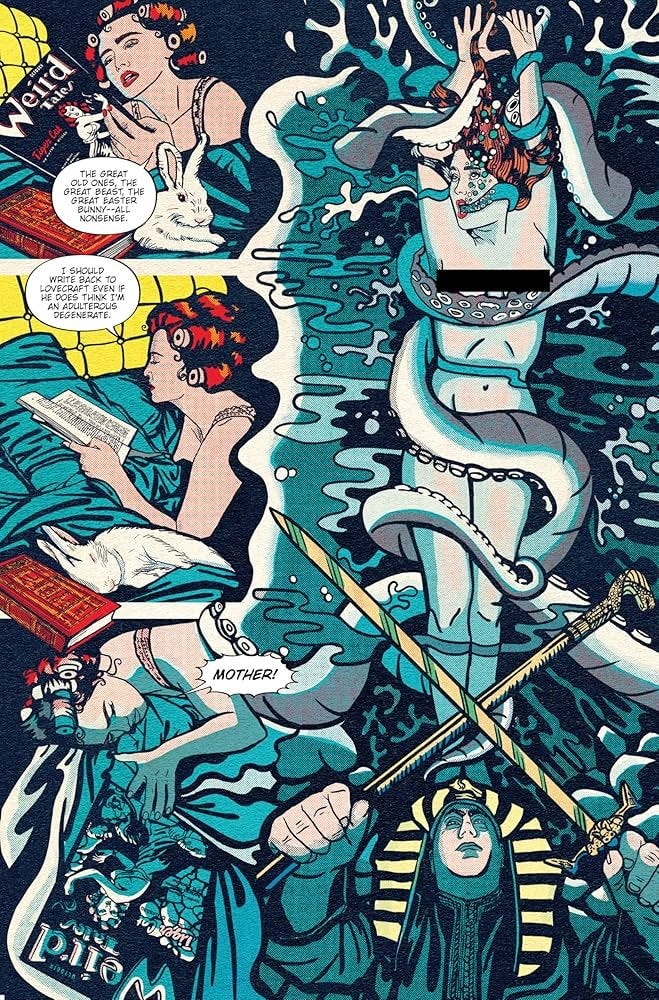
Minky Woodcock often finds herself in provocative situations, to say the least. It’s noir detective meets sex in the 19th century. Like an Ian Fleming novel, Minky always finds herself in dangerous or provocative situations. What were the influences or fun-happenstances that made you want to go there with her?
CYNTHIA VON BUHLER: Noir has always carried a sensual edge, but historically, that sensuality restricted women instead of empowering them. I wanted Minky to use her sexuality as a tool, the way a spy might use a forged document. She is provocative because she chooses to be. And if she wants to thank a fisherman for saving her with a romp, that is her call.
The ritual scene with Crowley and Lovecraft grew directly from Lovecraft’s terror of tentacles and his lifelong sexual repression. He was an extraordinary writer but also a deeply prejudiced man, and I didn’t mind putting him through a few nightmares of my own making, even if they take place only inside his imagination.
I was astounded by how well-researched this book is regarding the era. For instance, Faustian tales are such a staple on occultist practices, the ideas of selling your soul for something equivalent in exchange. Getting to know Minky Woodcock, as her creator, what would you say is something she’s gained over the years with her journey thus far? And what do you think that she’s sacrificed?
CYNTHIA VON BUHLER: She has gained knowledge—painful, dangerous, transformative knowledge. She now understands the hidden layers of the war: Crowley’s rituals, MI6’s deceptions, Operation Mincemeat’s corpse, and the writers whose imaginations shaped actual military victories. She has learned how stories can be weaponized, how propaganda shifts nations, and how a single forged document can redirect history.
She has walked through danger and confronted threats most would avoid. In return, she has gained unshakable agency, sharpened vigilance, and the courage to face the truth without flinching.
She also uncovers more about her mother with each book. In the first volume we learned her mother drowned under mysterious circumstances. In the second, we discovered she was the real intellect behind her father’s detective reputation. In this volume, she learns her mother may have uncovered the identity of Jack the Ripper and possibly died because of it.
I have to bring up... The Orgy. You mix styles quite a bit, but… Hokusai’s The Dream of the Fisherman’s Wife? What a brilliant bridge to Lovecraft C’Thulu! Where the hell did you come up with that?
CYNTHIA VON BUHLER: History opened the door for it. Sexual ritual played a role in several occult circles of the early twentieth century, and wartime fascination with the occult was very real. Hokusai’s erotic tentacle print and Lovecraft’s cosmic tentacles share a striking visual language where desire and fear coil around each other.
The scene became a symbolic center for the entire book, where beauty and horror move together in the same breath. That duality is at the heart of both wartime history and Lovecraftian myth.
Ok, finally. You’ve had an amazing career that I’ve greatly underplayed in this interview. I normally ask for words of inspiration or advice for new creators, but I don’t think I can really ask anyone to replicate what you do. So instead I’ll ask… What’s some good advice for finding ways to find yourself as an artist?
CYNTHIA VON BUHLER: Authenticity grows from embracing the obsessions that light up your imagination. Do not chase trends. Follow the questions that linger in your mind and refuse to leave.
I often tell artists to create a Venn diagram of what they’re good at, what they love, and what the world needs. Your art lives in the overlap. That space reveals the work only you can create.
Christian Angeles is a writer and entertainment journalist with nearly a decade of experience covering comics, video games, and digital media. He was senior editor at The Beat during its Eisner Award–winning year and also served as managing editor of The Workprint. Outside of journalism, he writes comics and books.
 | A guest post by
|
This is one helluva series! Everything about it is perfect. The attention to detail, the historical research, and of course the story itself.