

You Should Watch Project Hail Mary
This is a story about a Ryan Gosling science teacher, the end of the world, and a rock monster best friend

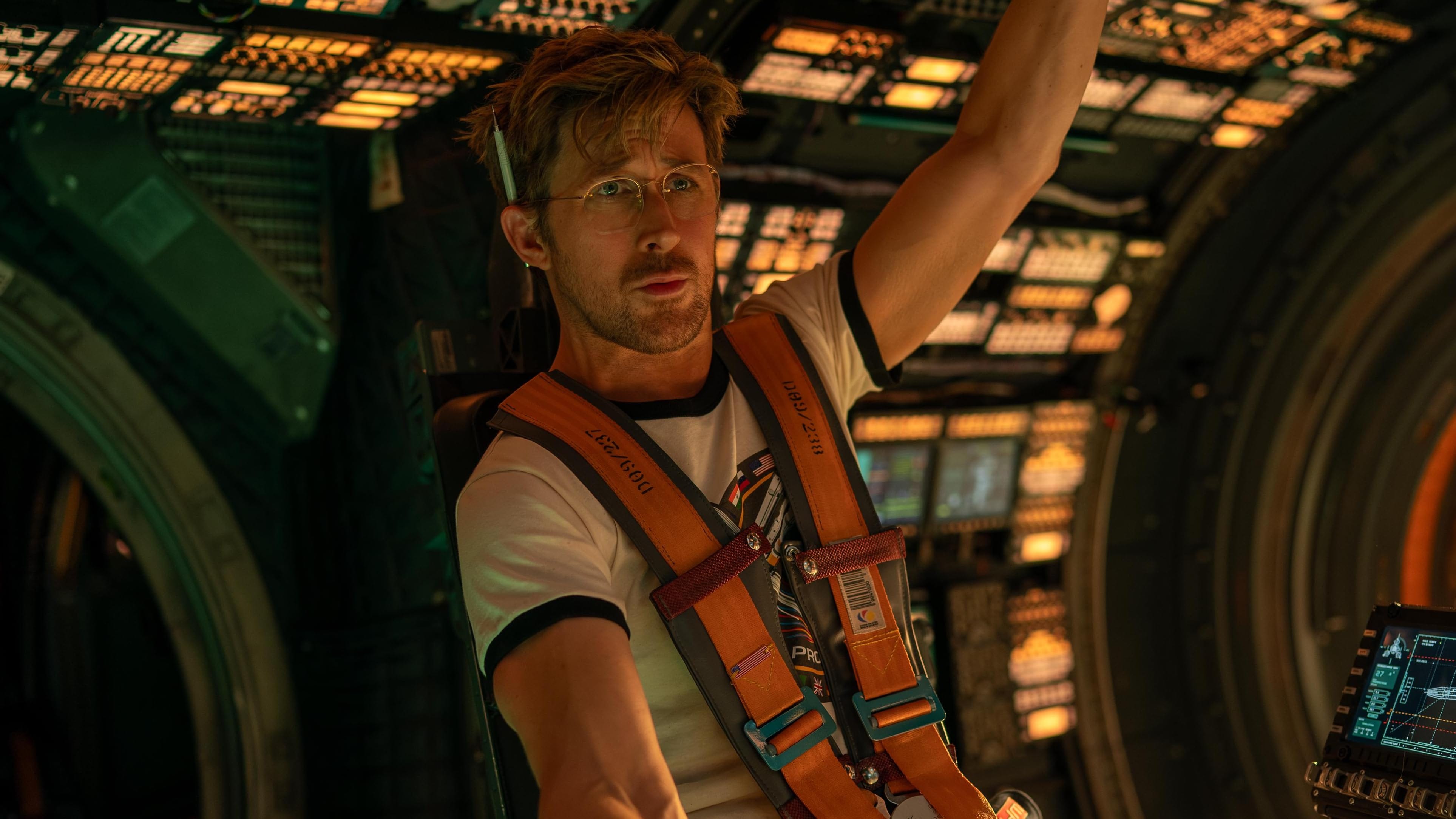
I just got out of Project Hail Mary, which was one of my most anticipated movies to watch this year for a reason. It’s got the second-best Rotten Tomatoes audience score in Sci-Fi history, second only to Godzilla Minus One.
It’s a family-friendly sci-fi ride about a nerdy but washed-up science teacher who becomes a reluctant hero with his alien rock monster arachnid best friend. And somehow? This movie stays grounded in terms of believability despite the absurdity of that premise.
Directed by Phil Lord and Christopher Miller (The Lego Movie and Into the Spider-Verse), with a script from Drew Goddard (Netflix’s Daredevil), and an adaptation of the bestselling novel by Andy Weir (The Martian) who is basically our generation’s Michael Crichton (Westworld Jurassic Park), this is a general audience sci-fi movie you can take the whole family to that takes hard science concepts and makes them fun.
The setup is simple. Ryan Gosling plays a kids’ science teacher named Dr. Grace who wakes up alone in space with no memory. We soon learn he’s humanity’s only chance to stop an extinction-level event in which a microorganism is draining the sun of its heat energy, and the Earth will slowly freeze to death due to global cooling, crops and livestock failing, and, likely, global war against one another once resources run scarce.
Fair warning.
None of how bad things can get is conveyed well in the movie adaptation compared to the book (which you should read).
Yet, for the sake of keeping it kid-friendly, much of the “Oh my God, we’re all gonna die miserably!” is underplayed to the tune of “We need to save the planet!” Which is the most fictional part of this movie… Because we know damn well, most of the world’s leaders don’t care about saving the planet.
Anyway, much like The Martian, the film leans hard into being accessible compared to the source material. There’s a lot more action (and dancing), plus moments of character to build a lot of heart.
As a result, the tone of the film is lighter. More buddy comedy with a dash of science with accessiblity for a general audience; which, by the marketing and overall tone seen, seems to have been the goal: making science fun for kids (and it works).
There’s humor as Gosling plays the character as awkward, confused, and kind of like a small man out of his depth, especially for the scale of how big this project is, with the theme of the movie becoming one about being ‘Brave’ in the face of danger.
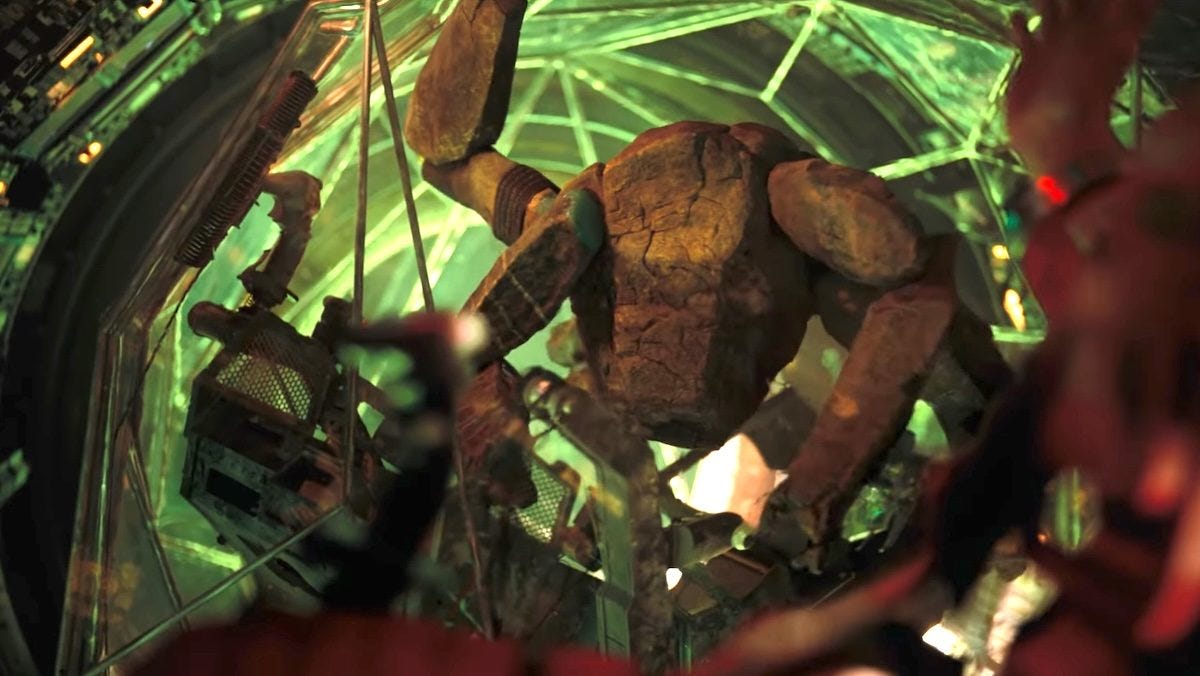
Whereas the book has more layers of nuance, this movie is good in that it stunningly leans into its visuals and playfulness. Once we learn about the Eridians, who are an alien race going through the same exact things humans are regarding their dying sun, the tone shifts and becomes mostly a tale about a man and his alien best friend working to save their worlds.
Played by a rock puppet.
Because yes, this is also heavily a story about Rocky: a tiny spider-rock monster alien. Rocky steals the movie acting as this generation’s E.T., at least, if E.T. were a brilliant engineer who could construct pretty much anything out of xenonite space metal. It’s awesome. And cool.
But here’s where it gets a little frustrating
The film sands down a lot of the harder science that made the book hit, and you can feel it. Whereas the book lived in its problem-solving, this movie simplifies things for accessibility, losing some of its culture and logic.
One perfect example?
One of my favorite parts of the book is the two of them learn each other’s languages. It rushed through in the movie and loses a key part of the story: that Rocky’s species bases their entire calculus on base 6 math?
2. 3. 4. 5. there is no 6. 7. 8. 9.
We humans?
We use base 10. 1-10 then 11, 12, etc.
Why does that matter?
Well, both species were counting the number of finger appendages on their hands just like their earliest respective ancestors. It created the basis for telling time and measuring distance. Pretty much the foundations for measuring quite literally everything in the world.
This is sort of huge and something utterly cool for kids, and even most adults, to know about because for those who don’t know...
This means all math stems from us counting the fingers on our hands
It also explains the structural engineering and cultural differences between Eridians versus humans and why their ships look the way they are. It’s one based on strings for sounds as their species have no eyes to see light and structures everything in base 6 mathematics.
Anyway, that’s just one of a sea of cool science facts lost in this movie. The same goes for how centrifugal force recreates gravity, a technique being explored in advanced space travel currently today and which you see a lot of in the spinning space ships throughout the movie, but isn’t explained.
Yet, perhaps the most important detail lost is how Astrophage even works. How it’s a threat to every star system and its surrounding planetary ecosystems, but also works as a fuel and an organism, eating energy from the sun to essentially fart out mass.
That’s kind of the tradeoff this movie makes across the board: clarity over depth.
Or like, why having a water-based energy source more powerful than a nuclear bomb would be both a world blessing and an incredibly scary curse to humanity.
Or how despite being brilliant engineers Eridians don’t understand the theory of relativity because they’re blind.
Again, all these changes and issues aren’t addressed to basically make the movie accessible for kids. Read the book then come back to the movie and you’ll enjoy it even better!
Consequentially, because the film cut a lot of why the science matters, one critique is that the stakes feel low back on Earth. Yes, the world is ending, but we never get into how it’s ending like in the book. How a minor fluctuation in climate change pretty much kills EVERYTHING at a certain point in time.
Or that the reason there is global collaboration and the need to launch Project Hail Mary right now… is because every second wasted means so many more are going to die. And die pretty miserably.
None of that’s said in the movie for the sake of keeping it friendly.
Still… It’s a good movie
And honestly, one that’s important as Hollywood doesn’t make enough films like The Martian or Arrival anymore. We need more original-feeling sci-fi that isn’t tied to a franchise, plus one, if it’s something that actually wants to teach you something.
That’s how you inspire the next scientists and we sort of need science right now more than ever given the state of… quite literally everything.
That alone makes it worth watching.
Agreeeeeeeee! 👏🏼